
Google Drops Samsung as Pixel 10 Chip Moves to TSMC– In the competitive world of semiconductors, every nanometer counts. With the upcoming Pixel 10, Google is making a game-changing decision, sending shockwaves through the tech industry. The search giant stayed with Samsung Foundry for years to fabricate its Tensor chips despite recurring performance and efficiency issues. But not anymore. Google is now switching to TSMC’s 3nm node for the next generation of Tensor chips, marking a pivotal turning point for both companies.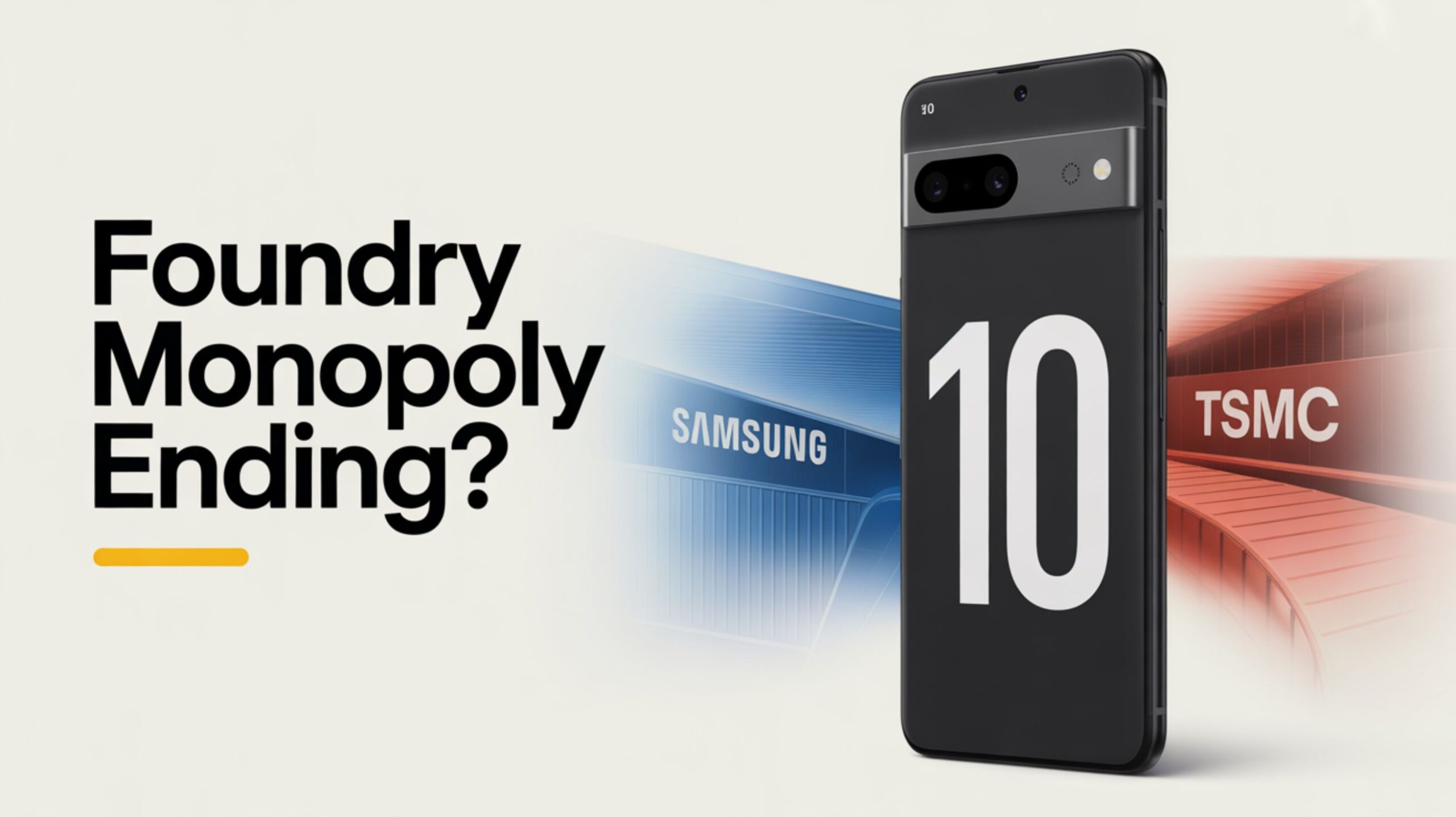
A Quick Recap: Google’s Journey with Samsung Foundry
When Google launched its first in-house Tensor chip with the Pixel 6 in 2021, it marked a bold new direction. Rather than using off-the-shelf chips like Qualcomm’s Snapdragon, Google opted for custom silicon, designed with help from Samsung LSI and manufactured at Samsung’s foundry.
The idea was clear: deeper integration between software and hardware, as Apple does with the A-series chips. But the reality? Far from ideal.

- Overheating issues in the Pixel 6 and 7 series
- Battery life complaints despite mid-tier performance
- Connectivity problems due to Samsung’s Exynos modems
Tensor chips were a compromise for many users, and critics often pointed fingers at Samsung’s less efficient fabrication technology.
Why Samsung’s Foundry Was Never the Best Fit
Samsung is a tech giant with undeniable strengths. Its display division makes the best OLED panels, and its memory chips dominate the global market. But Samsung Foundry—the division responsible for making chips—has long lagged behind TSMC, especially in cutting-edge node technology.
Key weaknesses in Samsung Foundry:
- High power consumption: Chips fabricated on Samsung’s 5nm and 4nm nodes often ran hotter than competitors.
- Low yield rates: Many chips were unusable due to manufacturing defects, driving up costs.
- Performance instability: Benchmark scores often varied wildly between units.
These shortcomings hurt not just Google but other former clients like Qualcomm and NVIDIA, who have since turned to TSMC for newer chips.
Why Google Stuck With Samsung for So Long
Why did Google persist with Samsung for four generations of Tensor chips if the results were subpar?
Here’s why:
- Close design collaboration: Samsung helped co-develop the early Tensor chips with its in-house Exynos architecture.
- Lower initial costs: Samsung’s foundry may have offered aggressive pricing to secure Google as a marquee customer.
- Strategic alignment: Samsung supplied other key components like displays and modems for Pixel devices.
However, as performance complaints mounted and the Pixel brand matured, Google knew it had to level up its hardware game.
Enter TSMC: The Gold Standard in Chip Fabrication
Taiwan Semiconductor Manufacturing Company (TSMC) is the world’s most advanced semiconductor foundry. If you’re using an iPhone, an AMD Ryzen chip, or a high-end NVIDIA GPU, chances are TSMC made it.
So, what makes TSMC the best in the business?
TSMC’s Advantages:
- High-performance, low-power nodes: Their 3nm (N3B and N3E) processes are more efficient than Samsung’s 4nm or 3nm attempts.
- Consistent yields: TSMC delivers quality at scale, meaning fewer defective chips.
- Track record of innovation: TSMC is the go-to for Apple, AMD, Qualcomm, and now, Google.
By moving to TSMC, Google is joining the elite club of tech companies prioritizing performance, efficiency, and reliability.
The Tensor G5: What We Know So Far
The upcoming Tensor G5 chip, expected to power the Pixel 10, will be:
- Fabricated on TSMC’s 3nm node
- Google’s first fully custom design, independent of Samsung LSI
- Optimized more for power efficiency and thermals than raw performance
While it may still use older CPU cores, the efficient 3nm process should lead to the following:
- Cooler operation
- Longer battery life
- Better sustained performance
This alone is a significant leap over the Tensor G1–G3 generations, often thermal throttling under moderate load.
Samsung Executives Reportedly Caught Off Guard
According to reports, Samsung executives were “shocked” by Google’s decision. They had likely assumed their longstanding relationship with Google would continue, especially with Pixel Fold devices entering the foldable market—a category Samsung dominates.
This unexpected blow has reportedly triggered the following
- Emergency strategy meetings within Samsung Electronics
- Plans for executive reshuffling in the foundry division
- A renewed push to revamp their fabrication roadmap
Unfortunately, these are reactive moves, not proactive improvements. And for many, Google’s leaving might be the final wake-up call.
A Widening Gap: Why Samsung Keeps Losing Foundry Clients
Samsung Foundry hasn’t just lost Google. Over the last few years, several key clients have moved away:
- Qualcomm: Now fabricates premium Snapdragon chips at TSMC.
- NVIDIA: Moved all of its latest GPUs to TSMC.
- Apple: Never used Samsung Foundry for core silicon.
Why the exodus? The performance-per-watt ratio is critical, and Samsung’s nodes couldn’t keep up. High-end chip customers need thermally efficient and stable platforms, something TSMC consistently delivers.
Modem Woes: Another Pain Point for Pixel Devices
Samsung’s issues don’t stop at chip fabrication. The Exynos modems bundled with Tensor chips have also been widely criticized:
- Poor connectivity in weak signal areas
- Higher power draw compared to Qualcomm modems
- Frequent dropped calls and inconsistent 5G performance
Thankfully, Google made some improvements with the Exynos 5400 modem in the Pixel 9, which reportedly fixes many of these issues. However, damage to Samsung’s reputation had already been done.
Long-Term Impact: Google and TSMC, Together Until Pixel 14
Reports suggest that Google has already locked in TSMC for multiple future Tensor chips—possibly until the Pixel 14.
This is a massive win for TSMC and a long-term loss for Samsung. Not only does Samsung lose revenue, but it also loses credibility. This could trigger further client losses in an industry where brand trust matters.
TSMC, on the other hand, continues to cement its position as the undisputed global leader in chip manufacturing.
The Bigger Picture: What This Means for the Smartphone Industry
Google’s move could reshape the future of Android hardware in several ways:
- Elevated Pixel experience: With a better chip and modem, the Pixel 10 might finally offer the flagship experience many users crave.
- Increased pressure on Qualcomm and MediaTek: If Tensor G5 performs well, more OEMs will be expected to explore custom silicon.
- Accelerated innovation: Samsung may finally revamp its foundry strategy to stay competitive.
Most importantly, it could signal a shift in how tech giants approach their hardware ecosystems, favouring quality and efficiency over legacy partnerships.
Wrap Up: A Necessary Step Forward for Google
Google’s decision to shift from Samsung to TSMC for its Tensor G5 chip in the Pixel 10 isn’t just a technical upgrade—it’s a statement.
This statement shows that Google is serious about competing in the flagship smartphone space. A statement that performance and efficiency matter. And a statement that legacy loyalty won’t save you if you can’t deliver.
For Samsung Foundry, this is a significant setback. However, for the Pixel lineup and its users, it could begin a new era of reliability, power efficiency, and flagship-worthy performance. As we look forward to the Pixel 10, one thing is sure: the game has changed, and Google’s move to TSMC might be the best decision ever made for its hardware division.

Selva Ganesh is a Computer Science Engineer, Android Developer, and Tech Enthusiast. As the Chief Editor of this blog, he brings over 10 years of experience in Android development and professional blogging. He has completed multiple courses under the Google News Initiative, enhancing his expertise in digital journalism and content accuracy. Selva also manages Android Infotech, a globally recognized platform known for its practical, solution-focused articles that help users resolve Android-related issues.