
In this article, we’ll discuss the features of UFS 2.0 vs. 2.1 vs. 3.0 vs. 3.1 vs. 4.0 and help you make an informed decision. If you’re looking to get your hands on a new mobile device and are curious about which UFS (Universal Flash Storage) version would be the best choice, you’ve come to the right place! Let’s dive into the world of UFS and help you make the right decision for your needs. UFS technology has come a long way and is now commonly used as memory in high-end mobile phones by manufacturers such as Samsung and OnePlus. But with the different versions available, understanding the differences and choosing the right one can be unclear. 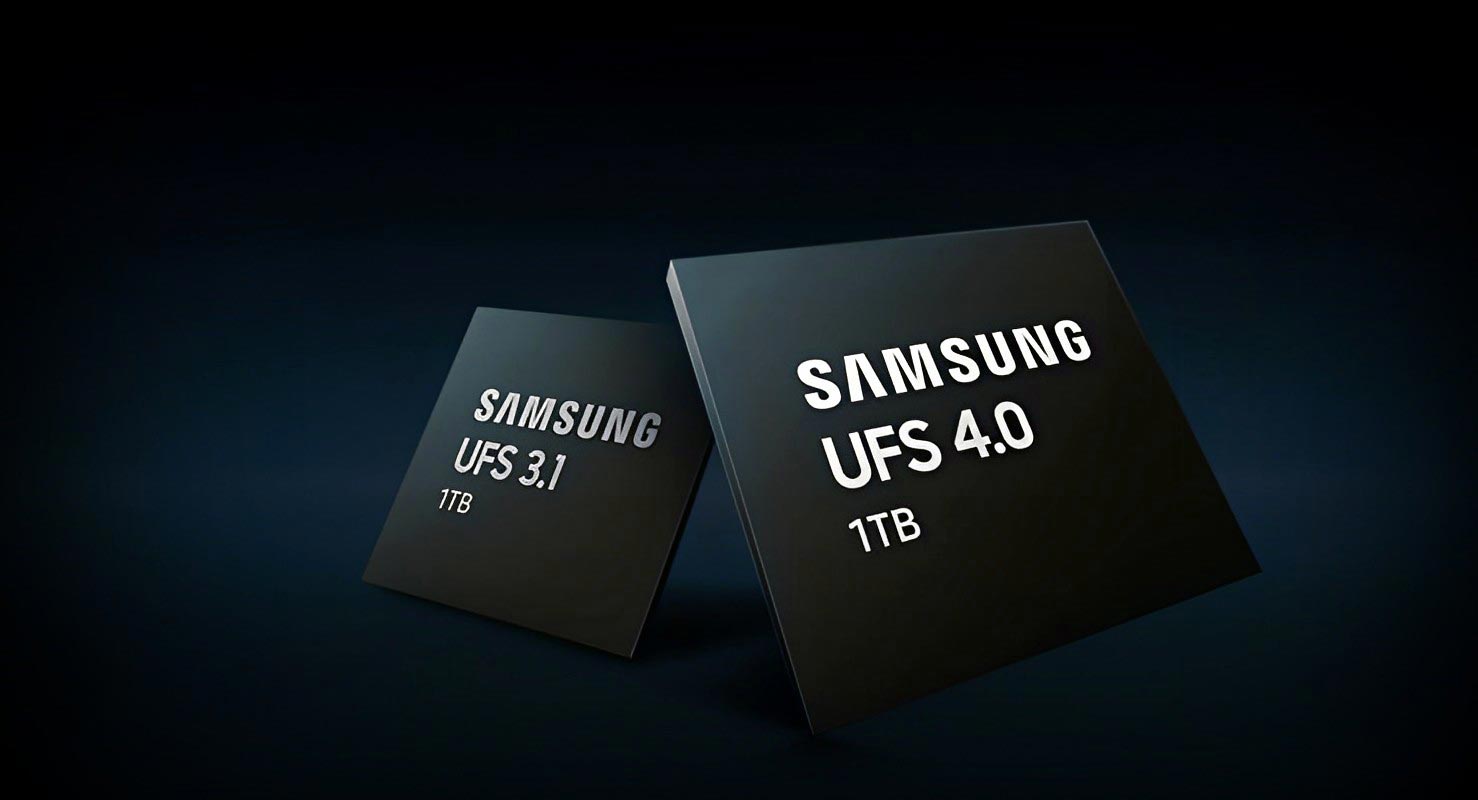
What is UFS?
UFS (Universal Flash Storage) is a flash storage standard for mobile devices, replacing the older eMMC (embedded MultiMediaCard) technology. It offers faster read and writes speeds, lower power consumption, and more storage capacity. The UFS interface in high-end smartphones and tablets provides faster data transfer speeds.
UFS 2.0
UFS 2.0 is the first version of the UFS standard introduced in 2013. Here are some of its features:

- Memory options: Up to 256GB
- Sequential read speed: Up to 850 Mbps
- Sequential write speed: Up to 260 Mbps
UFS 2.1
UFS 2.1 was introduced in 2015 and improved upon the features of UFS 2.0. Here are the characteristics of UFS 2.1:
- Memory options: Up to 1TB
- Sequential read speed: Up to 860 Mbps
- Sequential write speed: Up to 255 Mbps
UFS 3.0
UFS 3.0 was introduced in 2018 and significantly improved over previous versions. Here are the features of UFS 3.0:
- Memory options: Up to 512GB
- Sequential read speed: Up to 2100 Mbps
- Sequential write speed: Up to 410 Mbps
UFS 3.1
UFS 3.1 was introduced in 2019 and improved upon the features of UFS 3.0. Here are the characteristics of UFS 3.1:
- Memory options: Up to 1TB
- Sequential read speed: Up to 2100 Mbps
- Sequential write speed: Up to 1200 Mbps
UFS 4.0
UFS 4.0 was introduced in 2021 and offered even faster speeds and more features than the previous versions. Here are the characteristics of UFS 4.0:
- Memory options: Up to 1TB
- Sequential read speed: Up to 4200 Mbps
- Sequential write speed: Up to 2800 Mbps
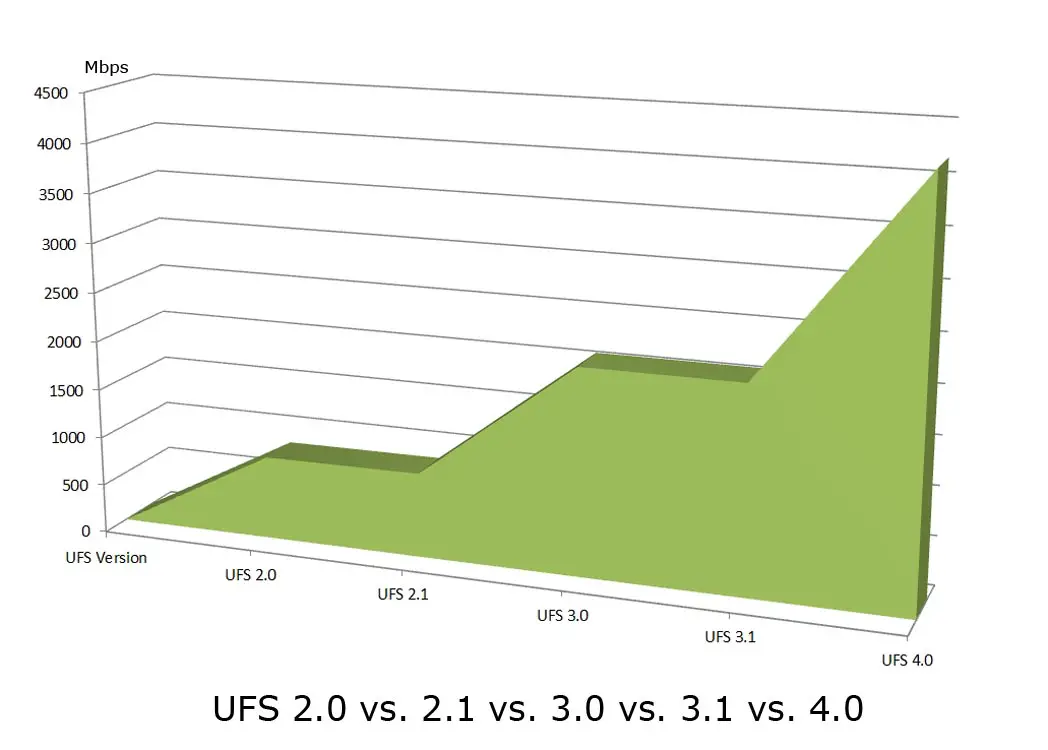
UFS Comparison Table- UFS 2.0 vs. 2.1 vs. 3.0 vs. 3.1 vs. 4.0
| UFS Version | Memory Options | Sequential Read Speed | Sequential Write Speed |
|---|---|---|---|
| UFS 2.0 | Up to 256GB | Up to 850Mbps | Up to 260Mbps |
| UFS 2.1 | Up to 1TB | Up to 860Mbps | Up to 255Mbps |
| UFS 3.0 | Up to 512GB | Up to 2100Mbps | Up to 410Mbps |
| UFS 3.1 | Up to 1TB | Up to 2100Mbps | Up to 1200Mbps |
| UFS 4.0 | Up to 1TB | Up to 4200Mbps | Up to 2800Mbps |
Which UFS version is the best for your mobile device?
So, which UFS version is the best for your mobile device? The answer to that question depends on your specific needs and preferences.
If you use your phone for many heavy-duty tasks, such as gaming or video editing, you might want to consider the latest UFS 4.0. It offers the fastest sequential read and writes speeds, which can make a noticeable difference in performance.
On the other hand, if you don’t use your phone for such tasks and want something that can offer decent performance without breaking the bank, then UFS 2.0 or 2.1 might be a good choice for you. They’re both widely available and affordable, and their performance is still significantly better than older eMMC standards.
If you need a lot of storage space on your mobile device, UFS 3.0 and 3.1 might be your best options. They both offer memory options of up to 1TB, which is more than enough for most people.
Ultimately, it all boils down to your personal needs and preferences when choosing the best UFS version for your mobile device. So, it’s a good idea to take some time to do your research and compare the different options available to make an informed decision. Don’t rush into anything – take your time and choose wisely!
FAQs
Can I upgrade my phone to a newer UFS version?
No, you can’t upgrade your phone’s UFS version. It’s a hardware limitation that the manufacturer determines.
Can I use UFS memory cards on my phone?
No, UFS memory cards aren’t compatible with phones that don’t have UFS interfaces.
Is UFS better than eMMC?
UFS performs better than eMMC, with faster read and write speeds and lower power consumption.
Do all new phones come with the Latest UFS version?
No, not all new phones come with UFS 3.1 or 4.0. It’s primarily found in high-end devices but is becoming more common in mid-range devices with some low versions.
Can I tell which UFS version my phone has?
You can find out which UFS version your phone has by checking the device’s specifications and third-party apps or contacting the manufacturer’s customer support.
Wrap Up
UFS 4.0 is the latest version available and boasts the fastest speeds, making it ideal for those who demand high-performance storage for their mobile devices. Also, It costs high than others. Because of the mobile, it puts on. However, it may not be necessary for everyone, and some users may find that earlier versions, such as UFS 2.0 and 2.1, are more affordable and widely available.
On the other hand, if you need a lot of storage space on your mobile device, then UFS 3.0 and 3.1 might be your better choice. These versions offer high storage capacity, allowing you to store a lot of data, files, photos, and videos without running out of space quickly. Ultimately, the best UFS version for your mobile device depends on your specific needs and preferences. It’s essential to research and consider factors like storage capacity, speed, and affordability before deciding.

Selva Ganesh is a Computer Science Engineer, Android Developer, and Tech Enthusiast. As the Chief Editor of this blog, he brings over 10 years of experience in Android development and professional blogging. He has completed multiple courses under the Google News Initiative, enhancing his expertise in digital journalism and content accuracy. Selva also manages Android Infotech, a globally recognized platform known for its practical, solution-focused articles that help users resolve Android-related issues.