
Google’s Next TV Streamer Could Bring Hands-Free TV Control – Home entertainment is constantly evolving, and streaming devices have become the absolute center of our living rooms. For years, consumers relied on simple USB-stick dongles tucked away behind television sets. However, hardware shifts have steered the industry toward more capable set-top boxes. Recent industry leaks and supply chain rumors indicate that Google is preparing a major successor to its existing streaming lineup.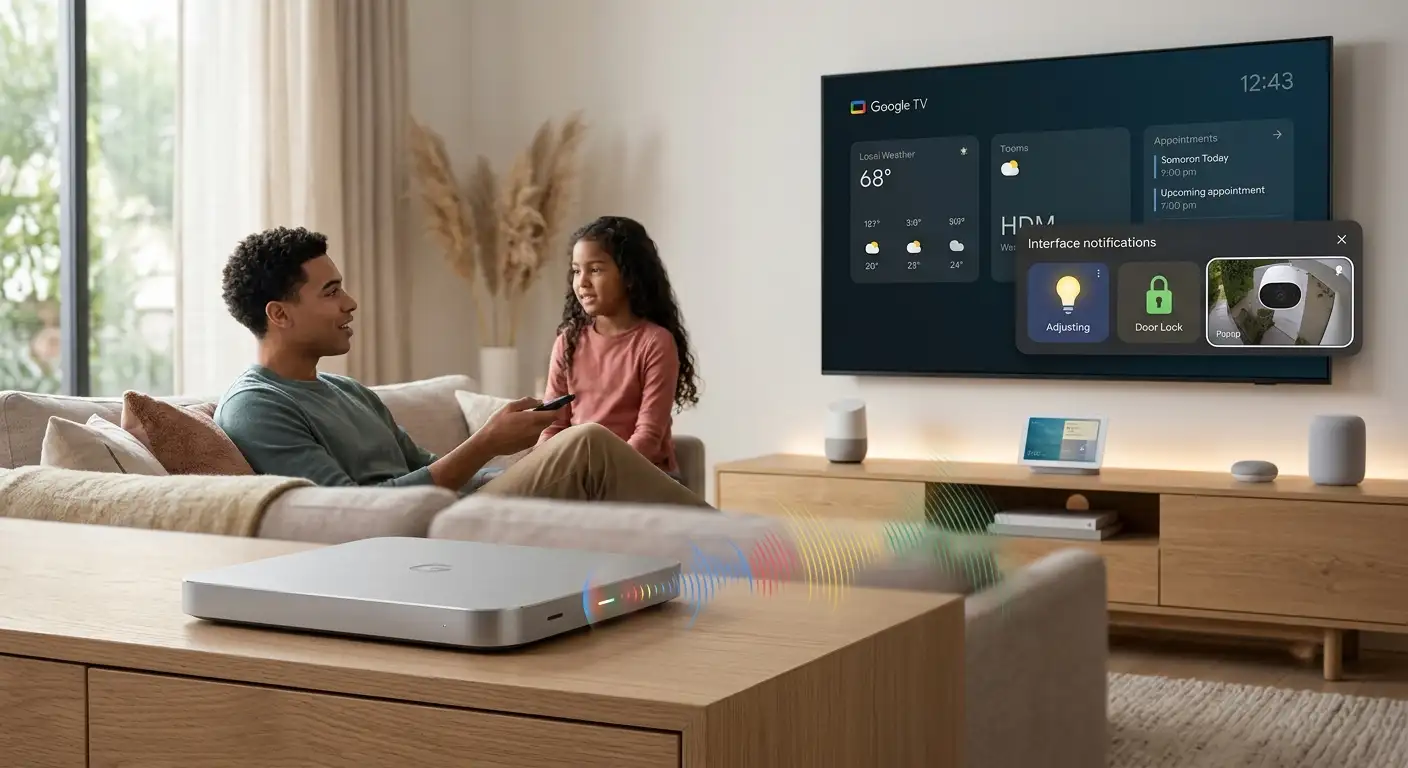
This upcoming hardware release aims to redefine how everyday users interact with their home entertainment systems. By focusing heavily on ambient intelligence, advanced voice interaction, and deeper smart home integration, the next-generation Google TV Streamer is shaping up to be far more than a simple box for playing movies. Whether you are a dedicated technology enthusiast or a casual viewer who just wants an easier way to watch your favorite shows, understanding these upcoming changes will help you decide when it is time to upgrade your living room setup.

The Evolution of Living Room Hardware: Moving Beyond Traditional Streaming
The modern television has evolved from a passive display into an active digital hub for the entire household. Earlier streaming gadgets required users to fumble around with traditional remote controls, type out search queries letter by letter on an onscreen keyboard, or pull out a smartphone to cast content. While these methods worked, they often created unnecessary friction in daily use.
Industry reports suggest that Google’s upcoming streaming hardware is designed to eliminate these minor daily annoyances completely. Rather than forcing users to rely entirely on a handheld clicker, the new device is rumored to introduce built-in far-field microphones directly into the chassis of the streaming box. This means you will be able to speak commands aloud across the room without needing to pick up or activate your remote control.
Hands-Free Control and Voice Integration: Speaking Directly to Your Screen
One of the most exciting breakthroughs rumored for this upcoming device is the implementation of direct voice control capabilities. In previous generations, voice search was restricted to pressing a dedicated button on the remote control. While convenient, it still required a physical action.
With the integration of built-in far-field microphones, the next Google TV Streamer acts much like a smart speaker for your entertainment center. You can simply say out loud to pause playback, search for specific movies, check the weather, or manage connected smart appliances. This hands-free approach opens up incredible accessibility benefits. For non-tech-savvy family members, elderly users, or anyone with their hands full in the living room, being able to command the television naturally through speech removes traditional learning curves entirely.
Ambient Intelligence and Presence Sensing Features
Beyond voice commands, leaked details highlight another futuristic addition: presence sensing technology. This feature allows the device to recognize when someone enters or approaches the living room space.
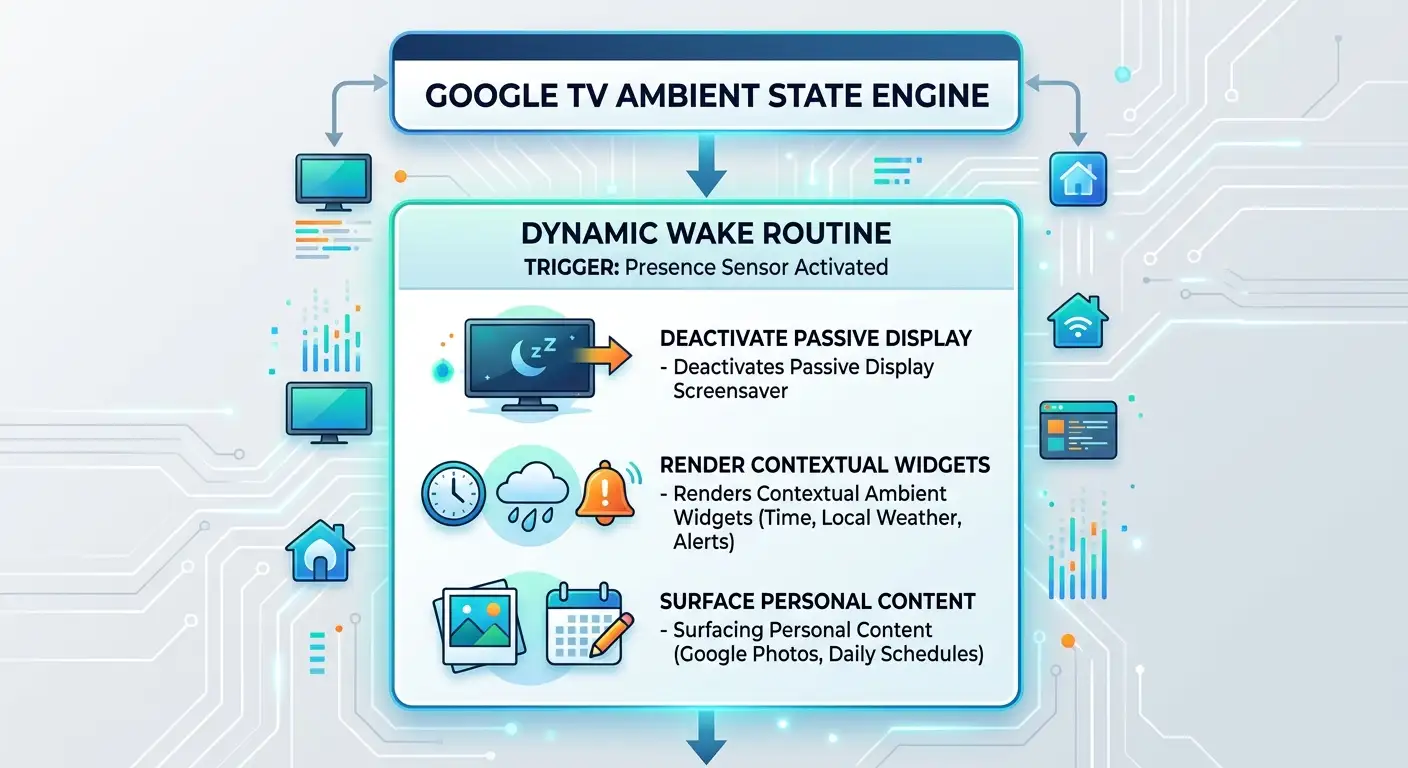
Instead of showing a generic, static screensaver when idle, the streaming box can dynamically wake up to display useful, glanceable information. As you walk into the room, the screen might automatically display localized weather updates, current time tracking, or personalized daily reminders. This level of contextual awareness transforms the television from an inert black rectangle on the wall into an interactive, helpful household assistant that responds intelligently to your presence.
Refined Physical Design and Compact Form Factor
Hardware leaks indicate that the new streaming device will maintain a familiar silhouette while introducing subtle physical refinements. Retaining a sleek, desktop-friendly set-top box design, the unit is rumored to be slightly narrower and more compact than its predecessor.
This form factor ensures that the device can sit neatly on an entertainment center, media shelf, or TV stand without drawing unwanted attention. Furthermore, a dedicated physical footprint allows for better thermal management and reliable physical connections, ensuring that high-definition video streams play smoothly for hours without overheating or dropping frames.
Seamless Smart Home Integration for Everyday Households
For many consumers, smart home technology can feel fragmented and complicated. Different brands require different hubs, apps, and protocols to communicate with one another. Google is actively working to bridge this gap by turning its entertainment hardware into a centralized command post.
The upcoming streamer is expected to support advanced ecosystem protocols like Matter and Thread, allowing it to interact natively with smart lightbulbs, wireless security cameras, smart thermostats, and automated door locks. Imagine watching a movie late at night and receiving a visual pop-up notification on your television screen showing who is at the front door camera, all without interrupting your playback. By unifying media consumption with home automation, the new streaming box acts as the true brain of the modern connected home.
What This Means for Current Streaming Device Owners
If you are currently using an older streaming dongle or a first-generation box, you might wonder whether an upgrade will be genuinely worthwhile. While older hardware remains functional for basic video playback, incremental advances in software responsiveness, storage capacity, and hands-free control represent a significant generational leap.
Older models frequently suffer from limited onboard storage space, leading to frustrating warning messages when users try to install modern streaming applications or games. Rumors point toward substantial improvements in processing efficiency and internal capacity, ensuring that app switching, menu navigation, and content loading happen instantaneously. For households looking to future-proof their entertainment setup, waiting for official announcements regarding Google’s next-generation TV hardware is a smart strategy.
Final Thoughts on the Future of Google TV
While official pricing, exact specifications, and launch timelines are yet to be formally confirmed by Google, the growing body of leaks paints a clear and exciting picture. By shifting focus toward hands-free voice control, ambient presence sensing, and unified smart home management, the upcoming Google TV Streamer is set to raise the benchmark for what consumers can expect from living room technology.
As television viewing habits continue to blend with home automation, having a responsive, intelligent media center will become increasingly essential. Keep a close eye on upcoming technology announcements as Google prepares to unveil the next chapter in home streaming innovation.
Frequently Asked Questions (FAQ)
When will the new Google TV Streamer be officially released?
Google has not yet announced an official launch date. However, given current supply chain leaks and developer documentation references, industry analysts expect official announcements during upcoming hardware showcase events.
Will the new device require an internet connection for hands-free voice commands?
While basic media playback commands and system actions may leverage local on-device processing algorithms, full Google Assistant query handling, weather updates, and smart home routing will require an active high-speed internet connection.
How does built-in far-field voice control work if my television is playing at high volume?
Far-field microphone arrays utilize advanced echo cancellation and background noise suppression algorithms. This technology allows the device to isolate spoken human voices even when loud audio is outputting from surrounding speakers or soundbars.
Can I turn off the built-in microphones if I am concerned about privacy?
Yes. Leaks suggest Google will incorporate a physical privacy switch on the hardware body to completely disable the far-field microphone array, allowing users to rely exclusively on traditional remote control voice activation.
Will the next-generation streamer replace existing Chromecast devices?
Google has phased out the classic hanging “dongle” Chromecast form factor in favor of dedicated set-top box architecture. The upcoming hardware serves as the premier entry in Google’s long-term living room streaming strategy.

Selva Ganesh is a Computer Science Engineer, Android Developer, and Tech Enthusiast. As the Chief Editor of this blog, he brings over 10 years of experience in Android development and professional blogging. He has completed multiple courses under the Google News Initiative, enhancing his expertise in digital journalism and content accuracy. Selva also manages Android Infotech, a globally recognized platform known for its practical, solution-focused articles that help users resolve Android-related issues.




Leave a Reply