
In response to the EU’s Digital Markets Act, Apple is adjusting its app distribution policies to address developers’ concerns. Apple’s compliance measures with the EU’s Digital Markets Act have stirred discussions and criticisms within the tech community. Apple is introducing several modifications to its app distribution policies to alleviate concerns and foster a more developer-friendly ecosystem. EU Users Get Sideload Option for Apple Apps Like Android. These changes are expected to provide developers with greater flexibility and transparency, potentially reducing the barriers to entry and competition within the Apple App Store. By implementing these adjustments, Apple aims to balance adhering to regulatory requirements and maintaining a thriving marketplace for developers and consumers, ensuring fair competition and innovation in the digital market.
Apple’s Response to EU’s Digital Markets Act- EU Users Get Sideload Option for Apple Apps Like Android
Changes to Alternative App Marketplaces
Previously, alternative app marketplaces in the EU were required to offer apps from multiple developers. However, Apple now permits these marketplaces to curate a catalog consisting solely of apps from the marketplace developer. This shift allows for more focused platforms akin to Meta’s app offerings.

Loosened Link-Out Rules
Developers seeking to redirect users outside the App Store for purchases are no longer bound to Apple-provided design templates. Instead, they can display offers that align with their branding and marketing strategies.
Introduction of Web Distribution
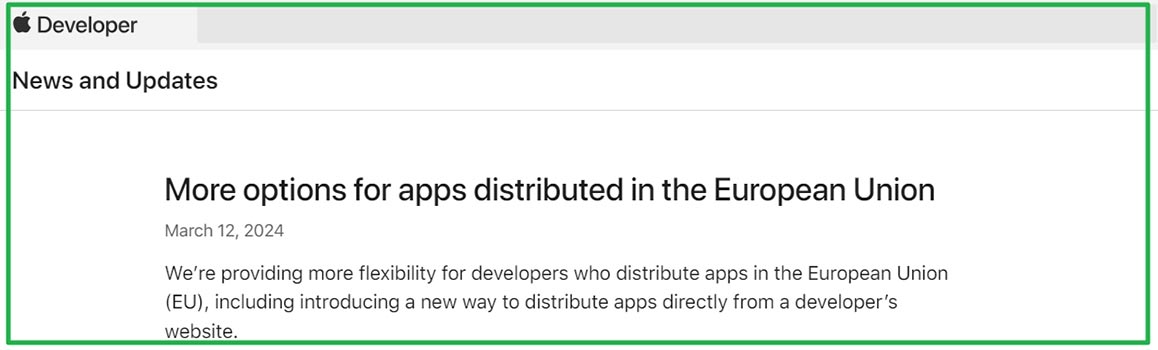
The most significant announcement is the introduction of “Web Distribution.” This feature, set to roll out following a software update in the spring, allows developers to distribute apps directly from their websites. This move mirrors the sideloading option on Android devices, providing users with more flexibility.
Eligibility Criteria for Web Distribution
While Web Distribution opens up new avenues for developers, certain eligibility criteria must be met. Companies in the Apple Developer Program, based in an EU nation and good standing, can leverage this feature. However, stringent requirements, including a minimum threshold for annual installs, apply.
Core Technology Fee
Developers opting for Web Distribution will be subject to a Core Technology Fee of €0.50 for each first annual install over one million in the past 12 months. While this fee structure aims to ensure fairness, it may pose financial challenges for larger developers.
Implications and Considerations
Impact on In-App Purchases
The changes also impact services relying on in-app purchases and subscriptions. Developers can now create custom designs for promotions and discounts, offering greater flexibility in monetization strategies while bypassing Apple’s standard templates.
Benefits for Publishers
Publishers, such as Epic Games, stand to benefit from the revised policies. The ability to list apps solely from the developer and link to external web pages for transactions presents new revenue generation and user engagement opportunities.
Developer Responsibilities and Transparency
With greater flexibility comes added responsibilities. Developers must adhere to transparency requirements, handle their taxes, and maintain communication with Apple to ensure compliance with guidelines.
Considerations for Users
While users gain more options for downloading apps, they must exercise caution regarding security and privacy risks associated with sideloading from third-party sources.
FAQs
Is Web Distribution available to all developers?
No, Web Distribution is limited to companies meeting specific eligibility criteria within the Apple Developer Program.
What is the Core Technology Fee for Web Distribution?
The Core Technology Fee amounts to €0.50 for each first annual install over one million in the past 12 months.
Can developers distribute apps from other developers via Web Distribution?
No, developers can only distribute apps from their developer account on their website.
What are the eligibility criteria for Web Distribution?
Companies must be in good standing with the Apple Developer Program and meet certain requirements, including annual install thresholds.
What are the implications of these changes for app users?
Users will have more app download options, but they should be cautious about the security and privacy risks associated with sideloading.
Wrap Up
Apple’s adjustments to its app distribution policies represent a strategic move aimed at accommodating the evolving needs of developers and users within the European Union. By offering alternatives to the traditional App Store model and fostering a more open ecosystem, Apple is positioning itself to better align with the changing regulatory landscape while simultaneously addressing concerns raised by developers.
This shift reflects Apple’s recognition of the importance of balancing fostering innovation and ensuring regulatory compliance in an increasingly digital marketplace. These changes signify a broader effort by Apple to adapt to the shifting dynamics of the technology industry and to maintain its position as a leading player in the market. By embracing flexibility and openness in its approach to app distribution, Apple aims to create an environment that encourages competition, drives innovation, and ultimately benefits both developers and consumers within the EU and beyond.

Selva Ganesh is a Computer Science Engineer, Android Developer, and Tech Enthusiast. As the Chief Editor of this blog, he brings over 10 years of experience in Android development and professional blogging. He has completed multiple courses under the Google News Initiative, enhancing his expertise in digital journalism and content accuracy. Selva also manages Android Infotech, a globally recognized platform known for its practical, solution-focused articles that help users resolve Android-related issues.




Leave a Reply