
Samsung Galaxy S25 FE vs. Google Pixel 10a – The landscape of premium mid-range smartphones is reaching an unprecedented peak as we look toward the next generation of mobile technology. At the forefront of this evolution are two highly anticipated devices: the Samsung Galaxy S25 FE (Fan Edition) and the Google Pixel 10a. Both handsets represent a strategic bridge between affordable utility and flagship-grade performance. In this exhaustive analysis, we dissect every technical specification, software nuance, and hardware capability to determine which device truly offers the best value for enthusiasts and everyday users alike.
Design Philosophy and Build Integrity
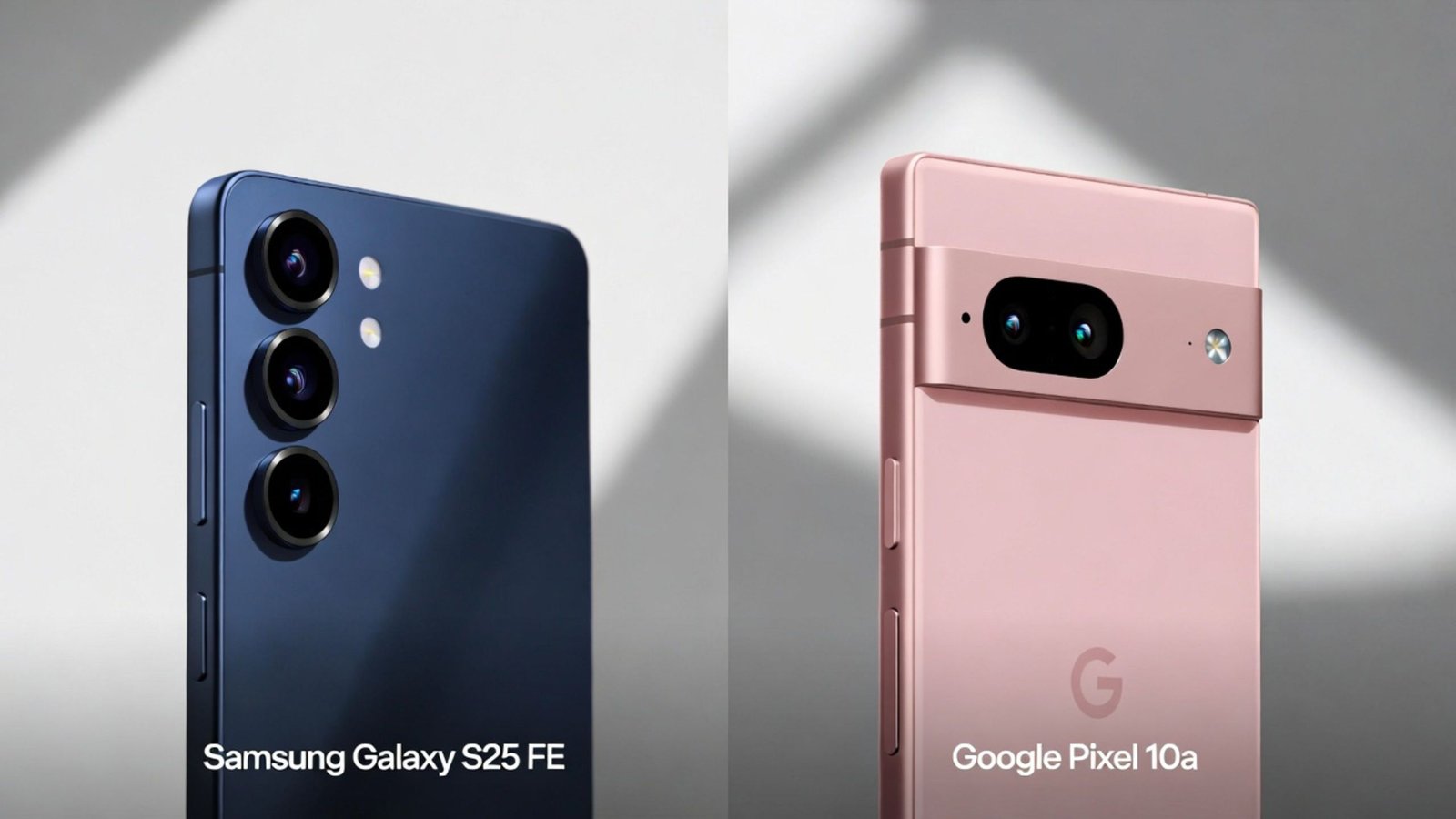
When evaluating the Samsung Galaxy S25 FE, we expect a continuation of the “Floating Camera” design language that has become synonymous with the S-series. We anticipate a build featuring Gorilla Glass Victus 2 on the front and a refined reinforced polycarbonate or “Glastic” back panel, framed by aerospace-grade aluminum. This combination ensures a premium tactile feel while maintaining high levels of impact resistance.

Conversely, the Google Pixel 10a is rumored to embrace a more radical departure from previous generations. Following the design cues of the Pixel 9 series, the 10a will likely feature a pill-shaped camera island rather than the edge-to-edge “Visor.” Google’s commitment to recycled aluminum and a matte finish glass back makes it a standout for users who prioritize ergonomics and sustainable manufacturing. Both devices are expected to carry an IP68 rating for dust and water resistance, ensuring durability in challenging environments.
Display Excellence: Dynamic AMOLED vs. Actua Display
Samsung has long reigned as the king of display panels. The Galaxy S25 FE is projected to house a 6.7-inch Dynamic AMOLED 2X display with a 120Hz adaptive refresh rate. The peak brightness is expected to reach 1,900 nits, making it exceptionally legible under direct sunlight. With HDR10+ support and ultra-slim bezels, the visual experience is tailored for high-fidelity media consumption and mobile gaming.
Google’s Pixel 10a will likely opt for a more compact 6.1-inch or 6.3-inch Actua Display. While smaller, Google’s focus on color accuracy and natural skin tones gives it an edge for photography enthusiasts. We anticipate an OLED panel capable of a 120Hz refresh rate, finally bringing the “a” series into full parity with flagship smoothness. The Super Actua technology may allow for peak brightness levels surpassing 2,000 nits, potentially outshining the Samsung in extreme outdoor conditions.
Next-Gen Processing: Exynos/Snapdragon vs. Tensor G5
The heart of these devices represents two different philosophies in computing. The Samsung Galaxy S25 FE will likely utilize the Snapdragon 8 Gen 4 or the Exynos 2500, depending on the region. These chips are built on a 3nm fabrication process, offering unparalleled raw power, multicore efficiency, and thermal management. For users who demand heavy multitasking or AAA gaming, the S25 FE’s hardware architecture provides a higher ceiling for performance.
The Google Pixel 10a marks a historical milestone as it is expected to feature the Tensor G5, Google’s first chip fully designed in-house and manufactured by TSMC. While it may not win the benchmark wars against Snapdragon, the Tensor G5 is engineered for Artificial Intelligence (AI) and Machine Learning (ML). This chip powers on-device Gemini Nano, real-time Live Translate, and sophisticated Computational Photography algorithms that define the Pixel experience.
Camera Systems: Versatility vs. Computational Mastery
Samsung’s approach to photography is centered on hardware versatility. We expect the Galaxy S25 FE to feature a triple-lens configuration:
-
50MP Main Sensor with Optical Image Stabilization (OIS).
-
12MP Ultra-Wide with a 123-degree field of view.
-
8MP or 10MP Telephoto with 3x Optical Zoom.
The inclusion of a dedicated optical zoom lens gives Samsung a distinct advantage for portraiture and long-range captures, a feature often missing in mid-range competitors.
Google, however, relies on its industry-leading image processing. The Pixel 10a will likely retain a dual-camera setup:
-
64MP Primary Sensor (IMX787 or similar).
-
13MP Ultra-Wide with Macro Focus capabilities.
Despite having fewer lenses, Google’s Magic Editor, Best Take, and Night Sight allow the Pixel 10a to produce images with superior dynamic range and shadow detail. For many, the “point-and-shoot” reliability of the Pixel remains the gold standard in mobile imaging.
Battery Life and Charging Infrastructure
Power management is critical for modern users. The Galaxy S25 FE is expected to pack a 4,500mAh to 4,800mAh battery. Samsung’s software optimization within One UI is renowned for extending standby time. However, charging speeds remain a point of contention; we expect 25W or 45W wired charging and 15W wireless charging.
The Google Pixel 10a typically features a slightly smaller 4,400mAh battery but benefits from the efficiency of the Tensor G5. Google’s Extreme Battery Saver mode can extend life up to 72 hours. Charging speeds are expected to hover around 20W to 27W, with the inclusion of Qi-certified wireless charging. Both devices will likely support Reverse Wireless Charging, allowing users to power up peripherals like the Galaxy Buds or Pixel Buds on the go.
Software Longevity and Ecosystem Integration
In the realm of software, both manufacturers have raised the bar. Both the S25 FE and the Pixel 10a are expected to launch with Android 15 and a promise of 7 years of OS and security updates. This ensures that these mid-range devices remain relevant well into the 2030s.
Samsung’s One UI 7 offers a feature-rich environment with Samsung DeX, sophisticated multitasking windows, and deep integration with the Galaxy Book and Galaxy Watch ecosystem. It is the preferred choice for power users who want their phone to function as a desktop-lite.
Google’s Pixel UI offers the “cleanest” Android experience, free of bloatware and prioritized for Feature Drops. The integration of Google AI is more seamless here, with the Circle to Search and Gemini assistant being core components of the user interface. For those who want the most intuitive and AI-centric software, Google wins.
Security: Knox vs. Titan M2
Security is a paramount concern for the modern consumer. The Samsung Galaxy S25 FE utilizes Samsung Knox, a defense-grade security platform that protects sensitive data from the hardware layer up to the software layer. It includes features like Secure Folder and Private Share, which utilize blockchain-based encryption.
The Google Pixel 10a relies on the Titan M2 security chip, a dedicated piece of hardware designed to protect your identity, SIM pins, and lock screen passwords. Combined with the Security Hub, Google provides a transparent view of app permissions and potential vulnerabilities, making it one of the most secure smartphones on the market.
Connectivity and Modern Standards
Both handsets will support the latest in connectivity:
-
5G (Sub-6 and mmWave) for ultra-fast cellular data.
-
Wi-Fi 7 for future-proof home networking.
-
Bluetooth 5.4 for high-fidelity, low-latency audio.
-
NFC for contactless payments via Samsung Wallet or Google Wallet.
Samsung may have a slight edge in signal reception in fringe areas due to its extensive history with modem integration, while Google benefits from the latest Fast Pair technology for instant accessory connection.
The Verdict: Which Should You Choose?
Choosing between the Samsung Galaxy S25 FE and the Google Pixel 10a depends on your specific priorities:
-
Choose the Samsung Galaxy S25 FE if: You want a larger display, a dedicated telephoto zoom lens, superior raw performance for gaming, and a feature-rich software environment like One UI.
-
Choose the Google Pixel 10a if: You prefer a compact form factor, the best computational photography, immediate Android updates, and a phone built from the ground up to leverage Google’s Artificial Intelligence.
Both devices represent the pinnacle of accessible technology. In the battle of S25 FE vs. Pixel 10a, there is no objective loser—only two distinct paths to a flagship experience at a fraction of the cost. As we approach the official release dates, it is clear that the competition between Samsung and Google will continue to drive innovation and value for consumers worldwide.

Selva Ganesh is a Computer Science Engineer, Android Developer, and Tech Enthusiast. As the Chief Editor of this blog, he brings over 10 years of experience in Android development and professional blogging. He has completed multiple courses under the Google News Initiative, enhancing his expertise in digital journalism and content accuracy. Selva also manages Android Infotech, a globally recognized platform known for its practical, solution-focused articles that help users resolve Android-related issues.





Leave a Reply