
In the ever-changing realm of internet connectivity, the Federal Communications Commission (FCC) has issued a groundbreaking recommendation, advocating for a minimum speed of 100 Mbps (megabits per second) for downloads and 20 Mbps for uploads. This decisive step represents a notable departure from prior benchmarks and carries substantial implications for broadband accessibility nationwide. By acknowledging the growing demands of modern digital life, the FCC’s move signals a commitment to bridging the digital divide and ensuring equitable access to high-speed internet for all Americans. This shift reflects an understanding of the evolving landscape of technology and the imperative to adapt standards accordingly, laying the groundwork for a more connected and inclusive society.
FCC Old 25 Mbps Speed Suggestion
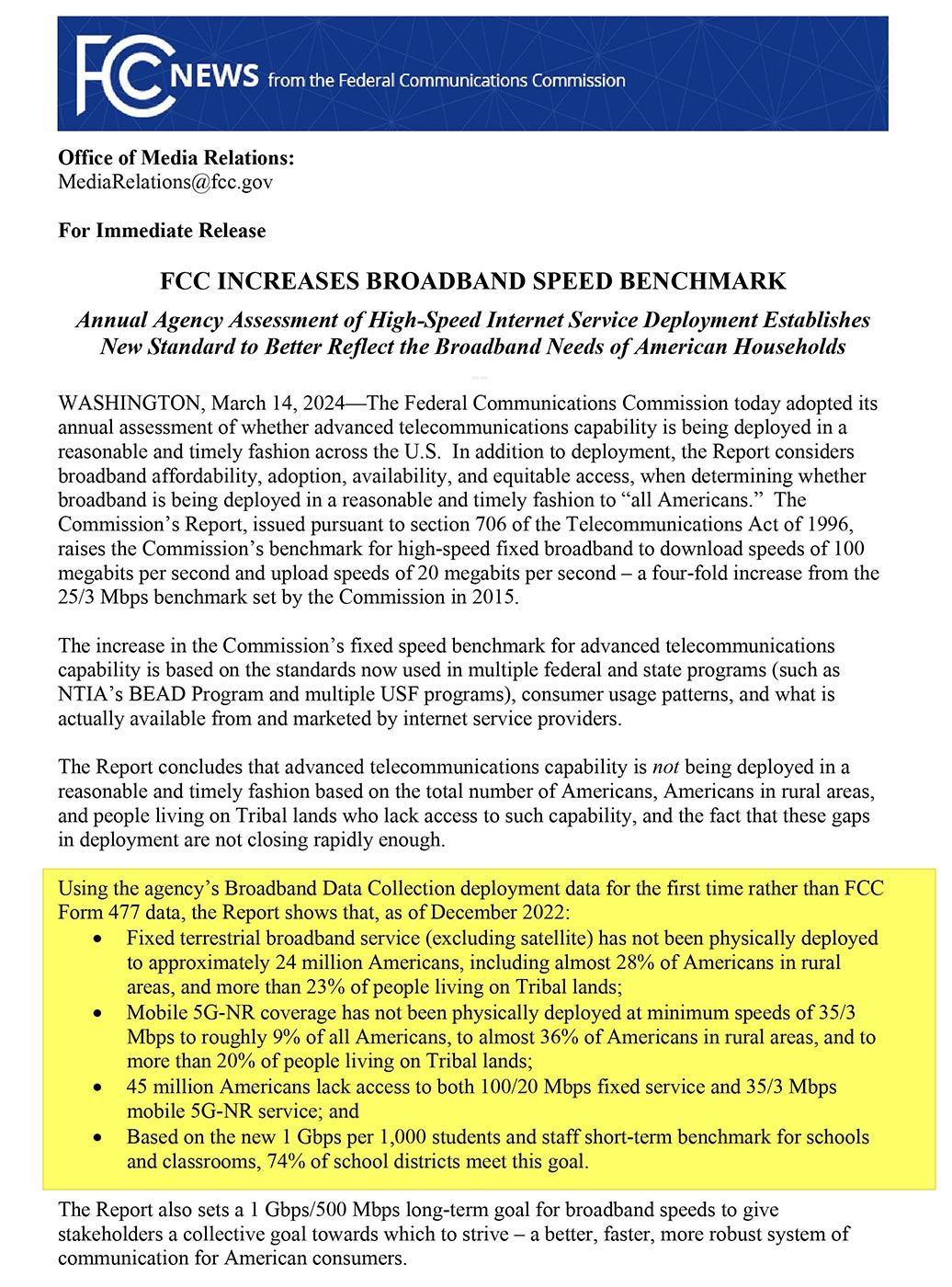
The definition of broadband has been subject to debate and revision for years. Since 2015, the FCC has maintained a benchmark of 25 Mbps for downloads and 3 Mbps for uploads. However, as technology advanced and digital demands surged, voices advocating for higher speeds grew louder. FCC Commissioner Jessica Rosenworcel, among others, had long argued for reevaluating these standards to accommodate the needs of modern society better.
FCC New 100 Mbps Recommendation
Now, the FCC has heeded these calls for change by redefining broadband to encompass speeds of 100 Mbps for downloads and 20 Mbps for uploads. This adjustment reflects a recognition of the evolving landscape of internet usage and the necessity for faster, more reliable connections. By raising the bar, the FCC aims to bridge the digital divide and ensure equitable access to high-speed internet for all Americans.

Rationale Behind the Change
The decision to raise the broadband threshold is rooted in a comprehensive assessment of various factors, including technological advancements, consumer usage patterns, and the availability of internet service providers (ISPs) services. By aligning the standard with federal and state funding requirements, the FCC seeks to leverage existing initiatives to drive progress in broadband accessibility.
Current State of Broadband Access
Despite technological strides, significant disparities persist in broadband access, particularly in rural and Tribal communities. According to FCC data, nearly 28 per cent of rural Americans lack access to wired internet, meeting the new standard. Moreover, disparities extend to 5G cellular speeds, with substantial portions of rural and Tribal populations underserved.
Implications of the New Standard
The FCC’s recommendation carries far-reaching implications for both ISPs and consumers. By setting a higher bar for broadband speeds, the FCC exerts regulatory pressure on ISPs to enhance their infrastructure and service offerings. Additionally, it raises consumer expectations regarding internet performance, fostering a demand for faster and more reliable connections.
FAQs
Why did the FCC decide to raise the minimum broadband speed?
FCC acknowledged growing internet demands, aiming for universal access to fast and reliable connections for all Americans.
How will the new recommendation impact rural communities?
The new broadband standard aims to bridge the digital gap by urging ISPs to extend services to underserved areas.
Can ISPs ignore the FCC’s recommendation?
FCC can’t force ISPs directly, but its recommendation holds weight; ISPs might face scrutiny for not meeting new standards.
What other factors besides speed affect internet access?
Speed, price, and latency influence the quality of internet access for consumers, not just one factor like speed alone.
How might consumers benefit from higher broadband speeds?
Higher broadband speeds enable smoother streaming, faster downloads, and improved remote work, education, and entertainment connectivity.
Wrap Up
The FCC plans to upgrade broadband speeds to 100 Mbps for downloads and 20 Mbps for uploads to meet digital needs. This proactive action emphasizes the importance of high-speed internet and its commitment to fostering connectivity and inclusivity in society.
By recognizing the evolving landscape of technology and the increasing reliance on digital infrastructure for work, education, communication, and entertainment, the FCC sets a precedent for other regulatory bodies to follow suit. This strategic move addresses immediate concerns regarding internet speeds. It builds a base for digital progress, ensuring everyone can engage fully in the digital era and enjoy its benefits.

Selva Ganesh is a Computer Science Engineer, Android Developer, and Tech Enthusiast. As the Chief Editor of this blog, he brings over 10 years of experience in Android development and professional blogging. He has completed multiple courses under the Google News Initiative, enhancing his expertise in digital journalism and content accuracy. Selva also manages Android Infotech, a globally recognized platform known for its practical, solution-focused articles that help users resolve Android-related issues.




Leave a Reply