
We have reached a pivotal moment in the history of the modern internet, one in which the long-standing promise of generous free cloud storage is beginning to show cracks. For over a decade, we have relied on Google as the gold standard for digital hoarding, with every new Gmail account acting as a 15GB sanctuary for our emails, high-resolution Google Photos, and essential Google Drive documents. However, recent developments have sent shockwaves through the tech community: Google has confirmed it is testing a significantly reduced 5GB storage limit for new users.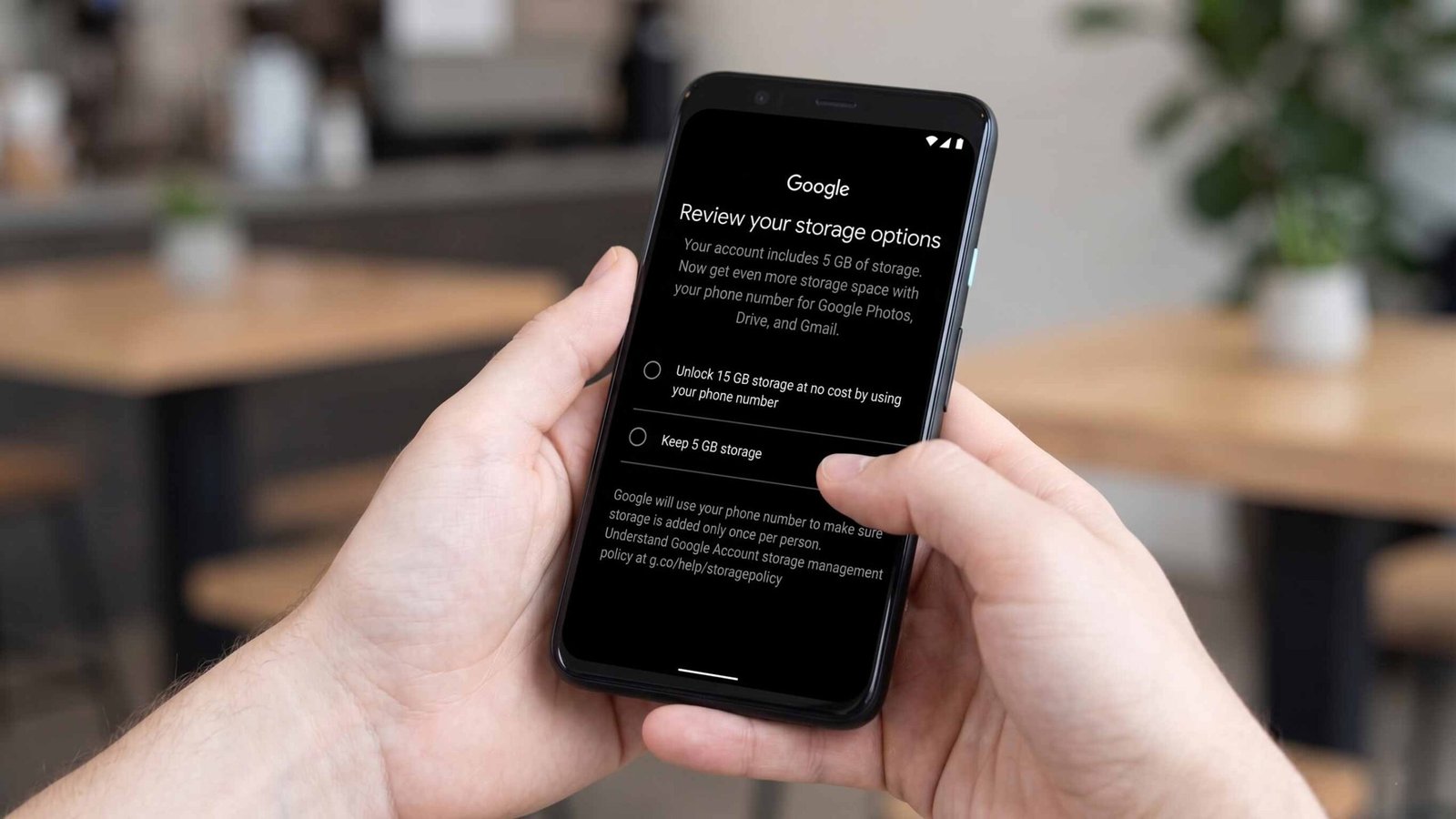
This shift marks one of the most substantial changes to the Google Account ecosystem since the merger of storage across its three primary services. At the same time, 15GB felt like an infinite playground in the early 2010s, a reduction to 5GB in 2026—an era of 4K video and massive app data—feels like a sudden return to the digital stone age.

The New 5GB Default: What You Need to Know
According to verified reports and subsequent confirmation from Android Authority, this new policy is not yet global but is being aggressively tested in select regions. For those caught in the test group, the standard “Welcome to Google” experience now looks very different. Instead of the familiar 15GB bar, new users are greeted with a notification stating that their account includes only 5GB of storage.
We have analyzed the user experience of those affected, and the implications are clear. The 5GB limit is a shared pool, meaning your Gmail inbox, Drive backups, and Photos library must all fit into roughly one-third of what we have come to expect. For a modern smartphone user, 5GB can be exhausted in a single afternoon of capturing high-definition memories.
The “Unlock” Mechanism: Why Google is Changing the Rules
What makes this policy particularly intriguing is the presence of an “unlock” mechanism. Google is reportedly offering users the chance to “reclaim” the full 15GB of free storage, but there is a catch: you must provide and verify a phone number.
We see this as a move toward a more authentic internet. By tethering the full storage allocation to a verified mobile number, Google is implementing a robust anti-spam and anti-bot measure. For years, the ease of creating “disposable” Gmail accounts enabled abuse of the 15GB storage tier. By forcing phone number linking, Google ensures the 15GB bonus is granted “only once per person,” effectively curbing the practice of creating infinite free storage silos.
The Impact on Privacy and Anonymity
While the anti-spam argument is valid, there is a significant trade-off in user privacy. For decades, a segment of the user base has valued the ability to maintain a Google account without linking it to a physical identity or a permanent mobile number. This new storage gatekeeping imposes a “privacy tax” on users.
- Verified Identity: Linking a phone number provides Google with a high-trust data point that connects your digital behavior to a real-world identity.
- Data Collection: Critics on platforms like Reddit have pointed out that this is a highly effective way for Google to clean up its user database and ensure every active account is tied to a unique, reachable individual.
- Security vs. Storage: Google frames this as an “account security and data recovery” improvement. While a phone number is indeed a vital recovery tool, making it a prerequisite for standard storage feels like a forced hand for many.
Why Is This Happening Now?
We must look at the broader economic and technical landscape of 2026 to understand this move. The cost of storage hardware and the energy required to maintain hyperscale data centers have risen sharply. Furthermore, the sheer volume of data generated by AI-powered features and high-resolution media has put an unprecedented strain on cloud infrastructure.
By defaulting to 5GB, Google significantly reduces its “dead weight”—the millions of gigabytes occupied by dormant or secondary accounts that never upgrade to a paid Google One plan. It pushes casual users closer to the storage ceiling, making a $1.99 monthly subscription feel like a necessity rather than a luxury.
Navigating the 5GB Limit: Strategies for New Users
If you are setting up a new account and find yourself restricted to the 5GB tier, you have a few strategic options. We recommend the following steps to ensure your digital life isn’t interrupted by “Storage Full” warnings:
-
- The Verification Route: If privacy is not your primary concern, linking your phone number is the fastest way to return to the 15GB baseline.
- Aggressive Management: Use the Google Storage Manager tool to identify large attachments in Gmail and blurry photos in Google Photos that are eating up your precious 5GB.
- Cross-Platform Offloading: Consider using alternative services like Proton Drive or Dropbox for document storage to keep your Gmail flowing freely.
The Competitive Landscape: Is 5GB the New Standard?
With Google’s move, we are seeing a homogenization of the cloud storage market. Apple’s iCloud has long offered a measly 5GB for its free tier, a policy widely criticized yet unchanged. Microsoft OneDrive also sits at the 5GB mark for free users.
For a long time, Google’s 15GB was the outlier—the generous offer that lured people into the ecosystem. By potentially lowering the bar to 5GB, Google is signaling that the era of the “free lunch” in the cloud is effectively over. The competitive advantage of a large free tier is being sacrificed at the altar of profitability and data integrity.
What This Means for Existing Users
If you already have a Google account, you can breathe a sigh of relief—for now. All indications suggest that this test applies only to new accounts created in specific test regions. Your existing 15GB (or more) remains intact. However, we have seen in the past how “tests” often become “global standards.”
We suggest that all users take this as a warning. It is a perfect time to export a backup of your most critical data using Google Takeout and to audit your current storage usage. The digital landscape is shifting, and the days of taking 15GB of free space for granted are coming to a close.
Frequently Asked Questions (FAQs)
1. Is the 5GB limit global?
No, Google has confirmed it is currently a regional test for new accounts.
2. Can I still get 15GB for free?
Yes, in the current test regions, you can unlock the full 15GB by verifying a phone number.
3. Does this affect my old Gmail account?
Existing accounts are currently unaffected and keep their 15GB allocation.
4. Why is Google making this change?
Google cites security, anti-spam, and ensuring storage is allocated “once per person” as primary reasons.
5. What counts towards the 5GB limit?
The limit applies to Gmail, Google Drive, and Google Photos.
6. What happens when I hit the 5GB limit?
You will be unable to send or receive emails, and you won’t be able to upload new files or photos.
7. Is there a way to bypass the phone number requirement?
In some regions, setting up a device without a SIM card might bypass it, but Google is closing these loopholes.
8. How much does it cost to buy more storage?
Google One plans typically start around $1.99/month for 100GB, though pricing varies by region.
9. Will Google Photos’ “High Quality” (Storage Saver) help?
Even compressed photos count toward your storage quota under the current policy.
10. Are other providers better?
While many offer 5GB, some niche providers offer more, but they lack Google’s ecosystem integration.

Selva Ganesh is a Computer Science Engineer, Android Developer, and Tech Enthusiast. As the Chief Editor of this blog, he brings over 10 years of experience in Android development and professional blogging. He has completed multiple courses under the Google News Initiative, enhancing his expertise in digital journalism and content accuracy. Selva also manages Android Infotech, a globally recognized platform known for its practical, solution-focused articles that help users resolve Android-related issues.





Leave a Reply