
The Reason Behind Apple Product Price Hike – We have all noticed it. When looking to upgrade an iPad, purchase a new Mac, or replace an aging device, the price tags at the Apple Store are significantly higher than they used to be. For everyday consumers who do not follow Silicon Valley corporate earnings or microscopic microchip logistics, this sudden shift can feel incredibly frustrating. It is easy to assume that a trillion-dollar company is simply testing the limits of customer loyalty.
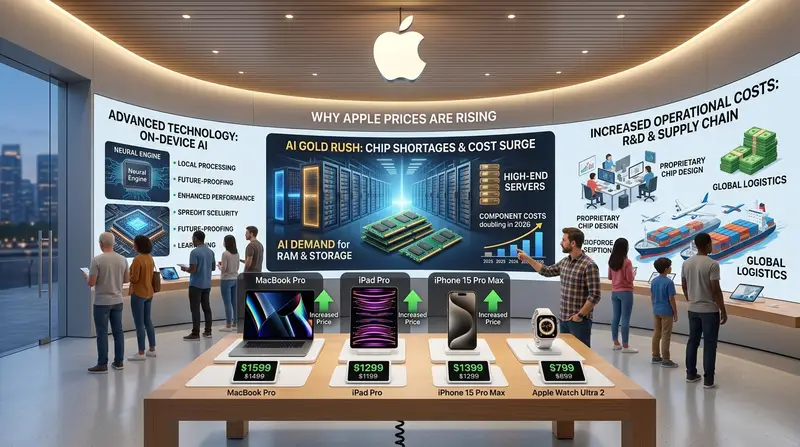

However, the real forces driving this global price adjustment are far more complex than simple corporate greed. We are witnessing an unprecedented structural shift in how consumer technology is built, powered, and transported. From the sudden demands of the artificial intelligence boom to massive global component shortages and localized economic factors, several invisible puzzle pieces explain exactly why premium electronics are costing more.
The AI Gold Rush: How Artificial Intelligence Impacts Your Wallet
The single most dominant driver behind the recent spike in hardware costs is the explosive growth of Artificial Intelligence (AI). While most non-tech users experience AI as a virtual assistant, a text generator, or an image tool on a web browser, the physical reality of AI requires an immense amount of physical machinery.
The Invisible Component Shortage
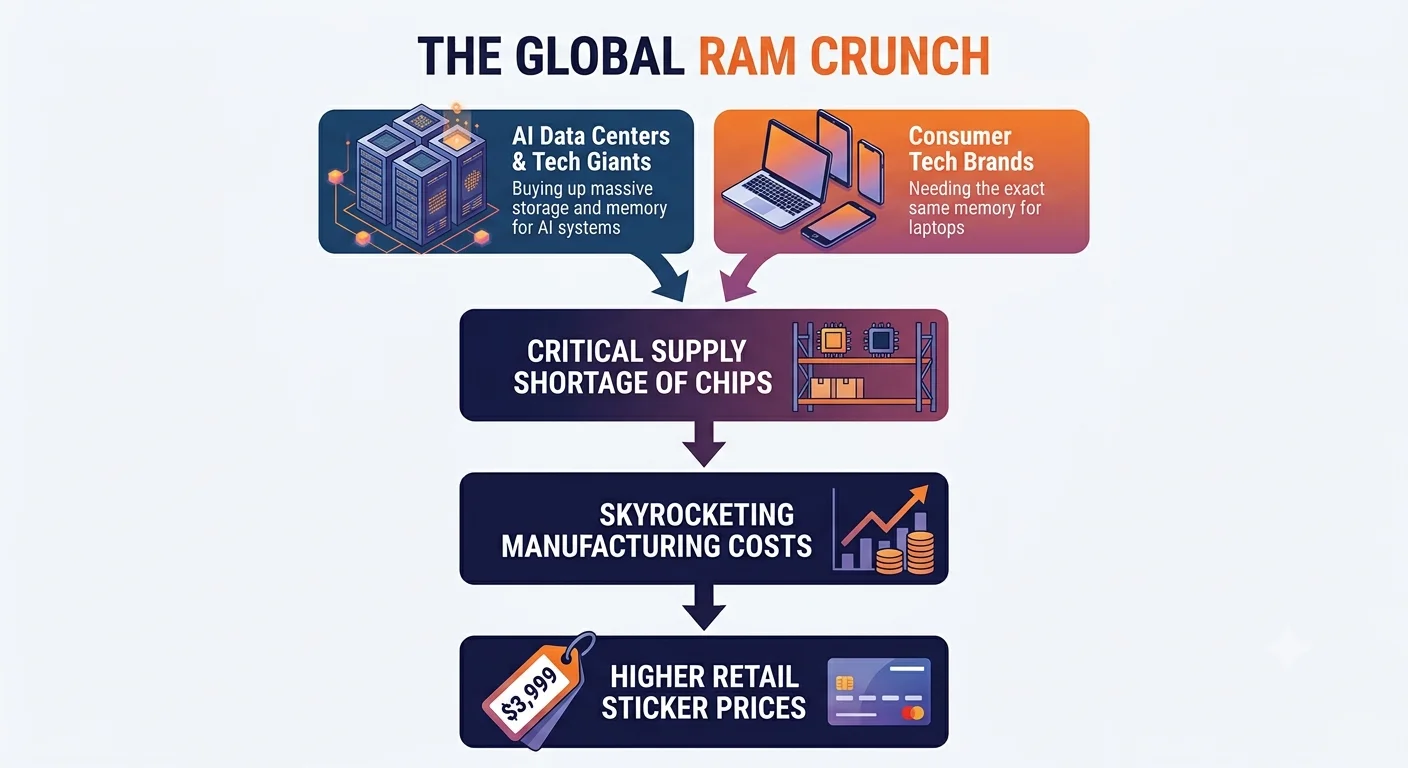
Every major technology company in the world is currently racing to build massive data centers—essentially giant warehouses packed with thousands of high-powered computers dedicated to processing AI data. These massive servers require a staggering amount of short-term memory (RAM) and long-term flash storage (SSD).
Because chip manufacturing factories have a limited capacity, chip suppliers like Micron, Samsung, and SK Hynix have been forced to prioritize these massive corporate orders. When tech giants buy up the available supply of memory chips at a premium, it creates a severe global shortage for consumer brands.
The “RAMageddon” Reality
This supply-and-demand imbalance has triggered an event that market analysts call “RAMageddon”—a massive, rapid surge in the cost of raw memory components. In early 2026 alone, the cost of standard device memory jumped by nearly 98%, followed closely by another projected 60% increase in the subsequent quarters.
For months, hardware manufacturers absorbed these soaring component costs behind the scenes to keep retail prices steady. However, when the cost of the basic parts required to assemble a device doubles in a matter of months, passing a portion of that financial burden onto the consumer becomes completely unavoidable.
On-Device Intelligence: Buying Future-Proof Technology
It isn’t just that the raw parts inside a device have become more expensive to buy; it’s also that devices now require fundamentally higher-quality parts to function in the modern era.
In the past, a basic laptop or tablet could get by with a modest amount of memory because most daily tasks—like browsing web pages, typing documents, or streaming movies—demanded very little raw horsepower. Today, consumer expectations have changed. Users want their devices to process smart photography, handle live translation, run complex offline security protocols, and manage smart assistance directly on the machine without relying on a slow internet connection.
To run these features smoothly directly on a laptop or tablet, a device requires far more baseline memory and vastly faster storage systems than its predecessors. When purchasing a modern Mac or iPad, we are no longer just purchasing basic aluminum and glass; we are paying for future-proof hardware infrastructure engineered to handle intensive software updates for the next five to seven years.
Skyrocketing Research, Development, and Custom Silicon
Another primary driver of premium tech pricing lies in the massive investments required for Research and Development (R&D).
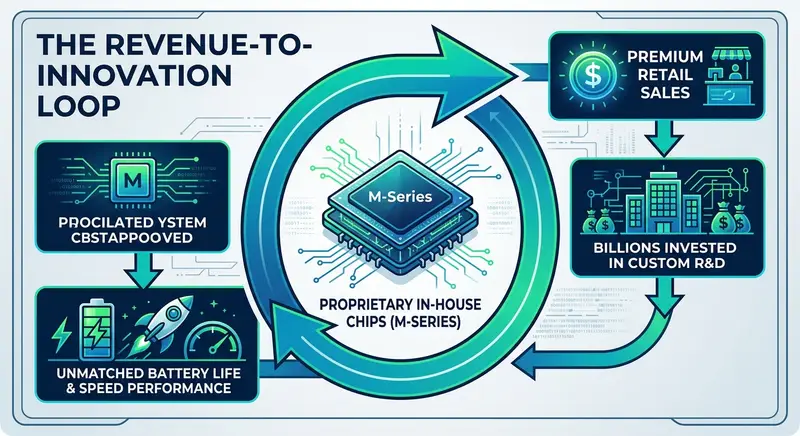
Years ago, most computer manufacturers bought off-the-shelf, standardized processors from third-party suppliers. Apple completely changed this landscape by developing its own custom in-house silicon chips (the famous M-series processors found inside modern Macs and iPads).
Designing proprietary processors from scratch requires billions of dollars in multi-year engineering cycles. While this transition away from generic components gave these premium devices class-leading battery life, whisper-quiet thermal efficiency, and immense speed, it also dramatically shifted the economics of manufacturing. The enormous cost of designing custom micro-architecture must be balanced by the final retail price of the hardware.
The Global “Chipflation” Domino Effect
The electronics ecosystem operates on a highly interconnected, fragile global supply chain. When a major disruption hits one sector, it triggers a domino effect that impacts retail pricing worldwide, a phenomenon known in financial sectors as “chipflation.”
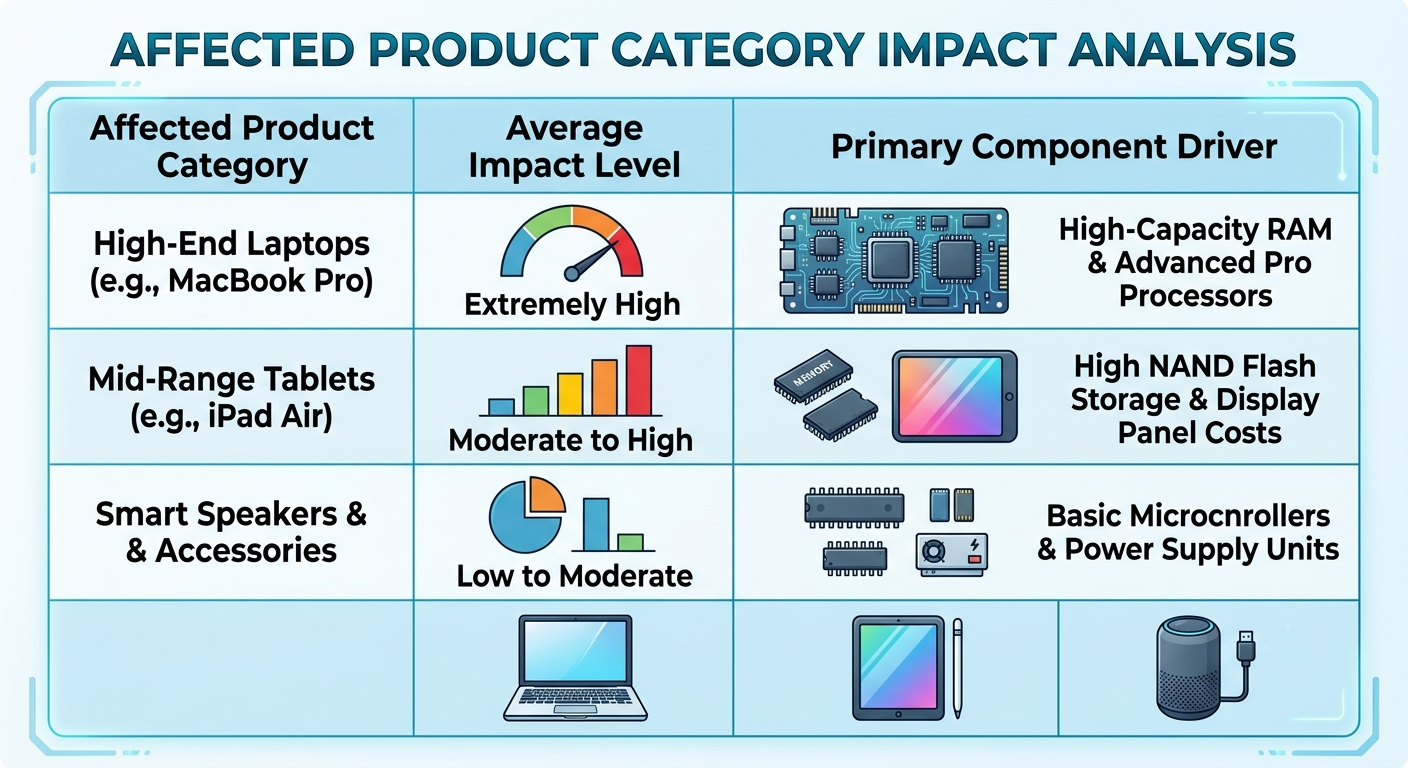
As shown above, the impact is not distributed evenly across all gadgets. High-end, professional-grade laptops that rely on massive memory configurations are far more exposed to volatile chip pricing than basic accessories.
Furthermore, the entire technology industry has been moving away from localized production. Diversifying supply chains across multiple regions globally—while vital for preventing sudden factory shutdowns—adds massive logistical friction, new regional tax layers, and increased shipping overhead. These systemic operational expenses build up quietly over time, compounding the final price tag displayed on retail shelves.
Ecosystem Lock-In and Strong Pricing Power
Beyond the raw logistics of manufacturing and component economics, there is a distinct psychological factor at play: brand equity and ecosystem integration.
When a consumer chooses a smartphone, tablet, or computer, they are rarely just evaluating a list of technical specifications. Instead, they are buying entry into a tightly integrated ecosystem where text messages sync perfectly across screens, smart earbuds switch audio sources seamlessly, and cloud storage backs up personal data automatically.
Because this ecosystem integration provides immense daily convenience, consumer demand for these specific products remains highly stable—even when prices rise. Economists refer to this dynamic as inelastic demand. When a brand possesses unmatched customer satisfaction and deep ecosystem lock-in, it maintains the unique power to raise retail prices to protect its financial margins without risking a massive loss of its core customer base.
International Economic Shifts, Tariffs, and Local Taxes
It is also highly critical to recognize that a price hike does not look the same in every country. A consumer shopping in Chicago may see a completely different price adjustment than someone browsing a retail store in Mumbai, London, or Tokyo.
-
Currency Fluctuations: Global trade is primarily executed using the U.S. Dollar. When local currencies weaken against the dollar, international divisions must adjust local retail pricing upward simply to match the baseline value of the product.
-
Import Duties and Tariffs: Many countries impose steep import taxes on completely assembled premium electronics to encourage domestic manufacturing. These local tariffs can instantly add hundreds of dollars to a product’s shelf price compared to its country of origin.
-
Local Retail Infrastructure: Building flagship physical stores, developing localized customer service networks, and setting up authorized repair centers in new international markets requires massive regional capital investment that influences local pricing strategies.
How Everyday Shoppers Can Smartly Navigate the Price Increase
While these macroeconomic factors are entirely out of our hands as consumers, there are several highly practical strategies that non-tech buyers can use to minimize the impact on their household budget.
Look for Previous-Generation Hardware
When component prices spike, the newest models bear the brunt of the cost increase. However, models released a year or two prior often remain available through authorized channels at deep discounts. For the vast majority of non-tech users checking email, managing family finances, or streaming video, a slightly older model offers more than enough performance at a far friendlier price.
Leverage Official Refurbished Stores
One of the best-kept secrets in consumer tech is the official manufacturer-refurbished store online. These devices are meticulously tested, fitted with brand-new outer shells and fresh batteries, and backed by identical one-year warranties as retail products, but are sold at a substantial discount.
Maximize Seasonal Promotions and Incentives
Avoid buying premium electronics at random points throughout the calendar year. Instead, align purchases with predictable retail windows:
-
Back-to-School Season: Usually running from July through September, offering direct discounts, gift cards, or bundled accessories.
-
Major Holiday Weeks: Black Friday, Cyber Monday, and regional festival sales frequently bring aggressive retail promotions.
-
Trade-In Programs: Trading in an older, functional device can significantly offset the sticker shock of a new upgrade.
Understanding the complex web behind modern tech pricing helps us shift our perspective from frustration to informed consumerism. The era of steadily falling laptop and gadget prices has temporarily evolved into a landscape driven by resource scarcity, artificial intelligence infrastructure demands, and advanced engineering. By staying patient, shopping during key promotional windows, and matching our actual daily needs to the right tier of hardware, we can navigate these rising costs without breaking the bank.

Selva Ganesh is a Computer Science Engineer, Android Developer, and Tech Enthusiast. As the Chief Editor of this blog, he brings over 10 years of experience in Android development and professional blogging. He has completed multiple courses under the Google News Initiative, enhancing his expertise in digital journalism and content accuracy. Selva also manages Android Infotech, a globally recognized platform known for its practical, solution-focused articles that help users resolve Android-related issues.





Leave a Reply