
Google Gemini AI Smart Glasses– The landscape of wearable technology is undergoing a seismic shift, and we are currently witnessing the dawn of a new era in personal computing. For years, the industry has speculated about when augmented reality (AR) would truly move from bulky headsets to the sleek frames of everyday eyewear. As we approach the major milestones of 2026, it has become increasingly clear that Google is no longer just experimenting; the company is preparing to redefine how we interact with the digital world through Android XR and the integration of Gemini AI.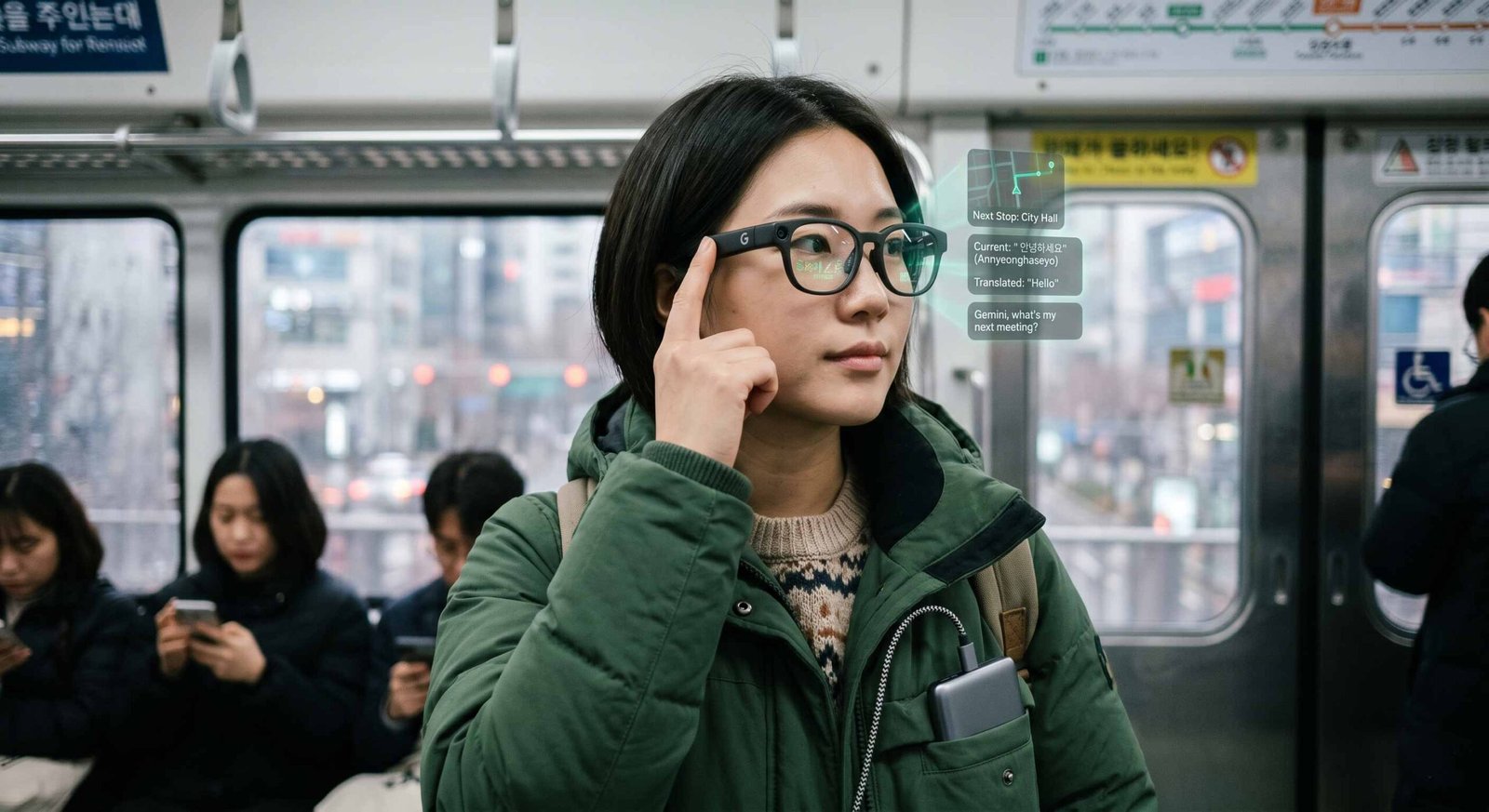
The Evolution of Android XR and Gemini Integration
The journey toward Google’s smart glasses began in earnest back in December 2024, when the tech giant first pulled back the curtain on the Android XR platform. This wasn’t merely a software update; it was the foundation for a spatial computing ecosystem designed to rival any competitor. By Google I/O 2025, the vision had matured. Attendees were treated to extensive demonstrations of unreleased Google smart glasses, showcasing a seamless marriage between hardware and the Gemini 2.5 Flash reasoning models.

We have observed a strategic pivot where AI is the primary interface. Unlike previous attempts at smart eyewear, these devices prioritize voice interaction and visual intelligence. Through the lenses of these prototypes, Gemini can “see” what the user sees, offering real-time context that was previously the stuff of science fiction. Whether it is translating a menu in a foreign city or identifying a historical landmark, the combination of Android XR and Gemini creates an ambient computing layer that follows us everywhere.
Google Gemini AI Smart Glasses- Project Aura: The Cutting Edge of Xreal Collaboration
One of the most significant reveals in the lead-up to 2026 was Project Aura, a collaborative effort between Google and Xreal. Unveiled during a late 2025 YouTube event, Project Aura represents the “pro” tier of what Android XR can achieve. These are not just simple notification glasses; they are a bold vision for wearable spatial computing.
Project Aura utilizes a unique split-compute design, where the glasses themselves remain lightweight while tethered to a portable Snapdragon processing puck. This allows for a staggering 70° field of view, layering digital content directly onto the physical environment without the heavy form factor of a traditional VR headset. For the developers and tech enthusiasts among us, the arrival of developer kits in early 2026 signaled that a consumer launch is imminent. This device bridges the gap between the Galaxy XR headset and standard eyeglasses, offering a “see-through” experience that maintains eye contact with the real world.
Partnership Ecosystem: From Warby Parker to Gucci
Google has learned from the past that technology must be wearable to be successful. To solve the “fashion problem,” the company has cultivated a diverse ecosystem of partners. We now know that brands like Warby Parker and Gentle Monster are at the forefront, developing frames that look indistinguishable from classic eyewear while housing sophisticated sensors and micro-LED displays.
The most surprising development is the entry of Kering, the parent company of Gucci. Confirmed reports indicate that Gucci-branded Android XR glasses are slated for a 2027 launch. This partnership moves Google’s wearable strategy into the luxury market, ensuring that the technology appeals to fashion-conscious consumers who demand both style and substance. By involving these iconic brands, Google is positioning Android XR as a lifestyle platform rather than just a gadget.
Samsung’s Dual-Threat: Jinju and Haean
While Google provides the software backbone, Samsung is aggressively pursuing the hardware lead. Internal leaks and industry reports have identified two distinct devices under development by the South Korean giant: Jinju and Haean.
- Samsung Jinju (AI Smart Glasses): Targeted for a late 2026 launch, these glasses are designed to be an “AI companion.” They lack a built-in display, focusing instead on audio-based AI interaction, photo capture via a 12-megapixel camera, and seamless Gemini Live integration. With a rumored price point between $379 and $499, Jinju is a direct shot at the Ray-Ban Meta dominance.
- Samsung Haean (AI Display Glasses): Expected in 2027, this more advanced model will incorporate a micro-LED display in one or both lenses. This allows for heads-up notifications, navigation overlays, and visual data, likely priced in the $600 to $900 range.
Navigating the Competitive Landscape: Apple and OpenAI
The road to 2027 is not without its challenges. Apple is reportedly finalizing its own smart glasses under the code name N50. Unlike the Vision Pro, these are rumored to be lightweight and focused on Apple Intelligence integration rather than full immersive VR. Current projections suggest a 2027 public release, with production starting in late 2026.
Simultaneously, the industry is buzzing about OpenAI’s hardware ambitions. Following the acquisition of io and the involvement of legendary designer Jony Ive, OpenAI is expected to debut an AI agent device by early 2027. This could take the form of a screenless wearable that relies entirely on high-level reasoning and voice interaction, further crowding the market for AI-first hardware.
Anticipating Google I/O 2026
All eyes are now on Google I/O 2026. We expect this to be the definitive moment when Google transitions from demos to a commercial launch strategy. With the Android XR platform maturing and Gemini 4.0 (or the latest iteration) offering unprecedented agentic capabilities, the first consumer models of Google AI glasses are likely to be announced.
The pricing strategy for Google’s own hardware remains a point of intense speculation. Given that the Galaxy XR headset sits at $1,799, we anticipate that the Google-made glasses will target a more accessible “mid-to-high” range, likely mirroring the $400 to $800 spread seen in the Samsung leaks. This would make the technology viable for a broader audience while still maintaining the premium feel of a cutting-edge AI device.
Frequently Asked Questions (FAQs)
1. When will the Google Smart Glasses be released?
While developer kits for Project Aura are available in 2026, a full consumer launch for Google’s AI glasses is widely expected to be announced at Google I/O 2026, with availability starting in late 2026 or early 2027.
2. What is the difference between Project Aura and Samsung Jinju?
Project Aura is a high-end AR wearable with a 70° field of view and an external processing puck. In contrast, Samsung Jinju is a display-less AI assistant frame focused on audio and camera features.
3. Will Google Smart Glasses have a camera?
Yes, most models, including those from Samsung and Xreal, are expected to feature at least a 12-megapixel camera used for both photo/video capture and AI visual recognition.
4. How much will the Android XR glasses cost?
Entry-level AI glasses (without displays) are rumored to start around $379, while premium models with micro-LED displays like Haean could cost up to $900.
5. Do I need an Android phone to use these glasses?
Since they run on the Android XR platform, they are designed for deep integration with the Android ecosystem, though some basic features may eventually support cross-platform use.
6. What can Gemini do on smart glasses?
Gemini can perform real-time translation, identify objects, provide navigation via Google Maps, and interact with apps to send messages or search the web based on what you are looking at.
7. Is Gucci making smart glasses with Google?
Yes, Kering (Gucci’s parent company) has a confirmed partnership to launch luxury Android XR glasses, with a projected release date in 2027.
8. How do these compare to the Ray-Ban Meta glasses?
Google’s offerings aim to go beyond Meta by providing deeper Gemini AI integration and, in the case of Project Aura and Haean, actual AR display capabilities that Meta’s current frames lack.
9. What is the battery life of these AI glasses?
Current leaks for models like Samsung Jinju suggest a 155 mAh battery, which is optimized for all-day use with a focus on intermittent AI tasks rather than constant video streaming.
10. Will there be a “Google Glass 2”?
While not officially named “Google Glass 2,” the upcoming Android XR glasses serve as the spiritual and technological successor to the original project, built with a decade of new AI and hardware advancements.

Selva Ganesh is a Computer Science Engineer, Android Developer, and Tech Enthusiast. As the Chief Editor of this blog, he brings over 10 years of experience in Android development and professional blogging. He has completed multiple courses under the Google News Initiative, enhancing his expertise in digital journalism and content accuracy. Selva also manages Android Infotech, a globally recognized platform known for its practical, solution-focused articles that help users resolve Android-related issues.





Leave a Reply