
Samsung Galaxy S26 Ultra Native Privacy Display Explained– In the ever-evolving landscape of mobile technology, the boundary between personal productivity and digital privacy has often been a point of contention. However, with the upcoming release of the Samsung Galaxy S26 Ultra, we are witnessing a paradigm shift in how users interact with their devices in public spaces. The most anticipated feature, and arguably the most revolutionary, is the Native Privacy Display. We have analyzed the trajectory of OLED technology and Samsung’s proprietary security suites to provide a comprehensive breakdown of how this on-device privacy shield works and why it sets a new benchmark for the premium smartphone market.
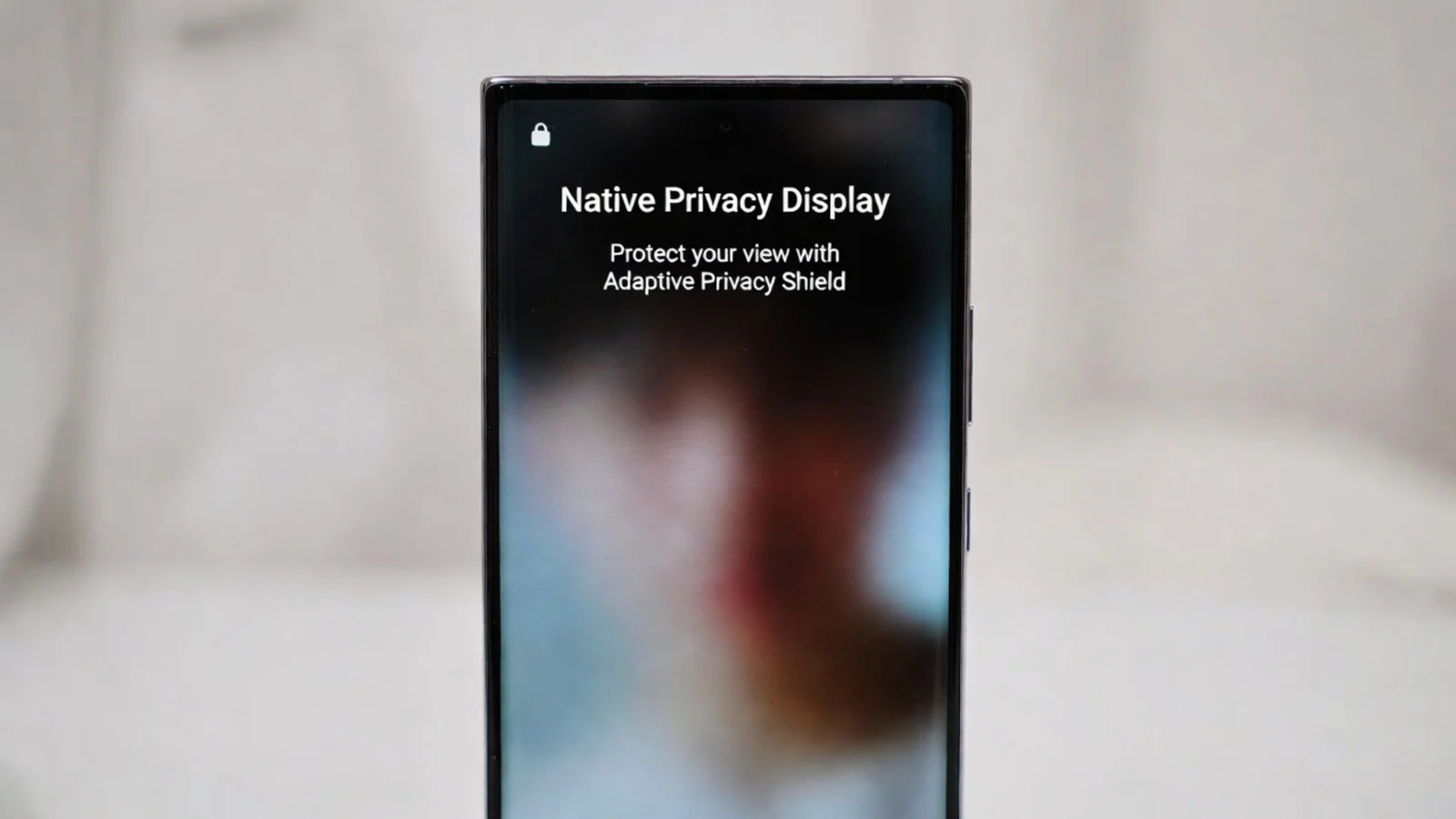
Understanding the Mechanics of the Native Privacy Display
The Samsung Galaxy S26 Ultra does not merely utilize a software-based filter to obscure screen contents; it integrates a hardware-level light-control layer directly into the Dynamic AMOLED 3X stack. This technology, often referred to as Active Privacy Polarization, allows the device to manipulate the viewing angles of the display at a sub-pixel level.

When the Privacy Mode is engaged, the liquid crystal molecules or the micro-lens array (MLA) within the display panel align to restrict the light path. This ensures that while the user sitting directly in front of the phone experiences peak brightness and color accuracy, anyone attempting to view the screen from an angle of 30 degrees or more sees only a darkened or completely black surface. This is a significant leap over third-party tempered glass privacy protectors, which often degrade touch sensitivity and display clarity.
Why Hardware-Integrated Privacy Outperforms Software Solutions
Historically, users relied on software dimming or “blackout” apps to hide sensitive information. These methods are fundamentally flawed because they do not prevent visual hacking from side angles. The Galaxy S26 Ultra’s Native Privacy Display addresses this by:
- Maintaining Resolution: Unlike physical screen filters that create a “grid” effect or “moiré patterns,” Samsung’s integrated solution maintains QHD+ resolution without compromising pixel density.
- Adaptive Refresh Rates: The LTPO technology in the S26 Ultra allows the privacy layer to function seamlessly even at 120Hz, ensuring that scrolling fluidity remains intact while your data stays hidden.
- Power Efficiency: Because the privacy layer is built into the display substrate, it requires minimal additional power, unlike software overlays that force the GPU to render unnecessary masks.
Visual Hacking and the Modern Professional
For the enterprise user and the privacy-conscious consumer, the threat of visual hacking in airports, coffee shops, and public transport is a growing concern. Samsung has recognized that cybersecurity begins at the physical interface. Whether you are reviewing confidential spreadsheets, accessing cryptocurrency wallets, or simply engaging in private correspondence, the S26 Ultra ensures that your “digital window” is shuttered to outsiders.
By implementing this at a native level, Samsung allows for granular control. Users can set the Privacy Display to trigger automatically when specific apps—such as banking portals or corporate email—are opened. This context-aware security is a hallmark of the One UI 8.0 ecosystem.
Integration with Samsung Knox and Biometric Security
The Native Privacy Display is not an isolated feature; it is deeply integrated with the Samsung Knox Vault. When the device detects an unauthorized attempt to view the screen—potentially through on-device AI using the front-facing camera to detect “shoulder surfing”—it can automatically increase the polarization intensity.
This synergy between AI-driven awareness and display hardware creates a multi-layered defense mechanism. Furthermore, the Ultrasonic Fingerprint Sensor has been optimized to work through this new privacy stack, ensuring that biometric authentication is faster and more secure than on previous generations like the S25 Ultra.
The Impact on Display Quality and Luminance
A common concern with privacy screens is the reduction in nit output. However, we have observed that Samsung’s M15 organic material set is engineered to compensate for this. The Galaxy S26 Ultra is rumored to reach a peak brightness of 3,000 nits. Even with the Privacy Display active, the user receives a calibrated high-dynamic range (HDR) experience.
The color gamut coverage remains at 100% DCI-P3, meaning photographers and editors can work on color-sensitive projects in public without fear of their work being seen, and without the distortion common in secondary privacy films.
Artificial Intelligence and Smart Privacy Switching
The Galaxy S26 Ultra leverages the Snapdragon 8 Gen 5 (or Exynos 2600) chipset to power its Proactive Privacy Engine. This AI-driven system uses the Ultra-Wide Front Camera to monitor the environment. If the AI detects a second pair of eyes focusing on the screen, a discreet notification appears, or the Privacy Display activates instantly.
This Real-Time Visual Defense is a game-changer for those who handle sensitive data. It moves the responsibility of privacy from the user to the device, providing peace of mind in high-density urban environments.
Comparing the S26 Ultra to the Competition
While competitors like Apple and Google have focused heavily on software encryption and cloud security, Samsung is taking a lead in physical display security. The iPhone 17 Pro Max is expected to focus on under-display FaceID, but there is currently no indication of a native hardware privacy filter. This gives the Samsung Galaxy S26 Ultra a distinct competitive advantage in the B2B (Business-to-Business) and high-end consumer segments.
The S26 Ultra is positioned not just as a smartphone, but as a secure mobile workstation. The inclusion of the S Pen further enhances this, as the digitizer has been tuned to work flawlessly with the privacy layers, allowing for secure note-taking and document signing.
Sustainable Innovation in Display Manufacturing
Samsung’s move toward Native Privacy Displays also reflects a commitment to sustainability. By eliminating the need for disposable plastic privacy screen protectors, Samsung reduces electronic waste. The Gorilla Glass Armor 2 used on the S26 Ultra is also designed to be more durable and less reflective, working in tandem with the privacy features to provide the best viewing experience in direct sunlight.
Final Verdict: Is the Privacy Display the Killer Feature?
In a market where incremental upgrades have become the norm, the Samsung Galaxy S26 Ultra Native Privacy Display represents a significant leap forward. It addresses a real-world problem—digital eavesdropping—with a sophisticated hardware-software hybrid solution.
For users who prioritize confidentiality, security, and cutting-edge display technology, the S26 Ultra is shaping up to be the definitive device of 2026. This feature alone justifies the “Ultra” moniker, transforming the smartphone from a passive tool into a proactive guardian of your digital identity.
By focusing on user-centric security, Samsung has not only improved the utility of the device but has also reinforced its position as the leader in display innovation. The Galaxy S26 Ultra is more than just a phone; it is a statement that your privacy is not for sale, and certainly not for show.
Key Technical Specifications of the S26 Ultra Privacy Stack:
- Display Type: Dynamic AMOLED 3X with Active Polarizer.
- Privacy Angle: 30-degree total blackout.
- Peak Brightness: 3,000 nits (Typical), 1,800 nits (Privacy Mode).
- Response Time: Sub-1ms switching between Normal and Privacy modes.
- AI Integration: Knox Sense with Shoulder-Surfing Detection.
The Galaxy S26 Ultra is set to redefine the flagship experience, proving that the most valuable feature a phone can offer is the ability to keep your business, your business.

Selva Ganesh is a Computer Science Engineer, Android Developer, and Tech Enthusiast. As the Chief Editor of this blog, he brings over 10 years of experience in Android development and professional blogging. He has completed multiple courses under the Google News Initiative, enhancing his expertise in digital journalism and content accuracy. Selva also manages Android Infotech, a globally recognized platform known for its practical, solution-focused articles that help users resolve Android-related issues.





Leave a Reply