
What Is the Android Pulse App? Google’s System Tool Explained – If you have noticed a mysterious background application named Android Pulse or seen com.google.android.apps.pulse listed in your phone’s storage settings, you might be wondering what it is, why it was installed, and whether it poses any privacy risks.
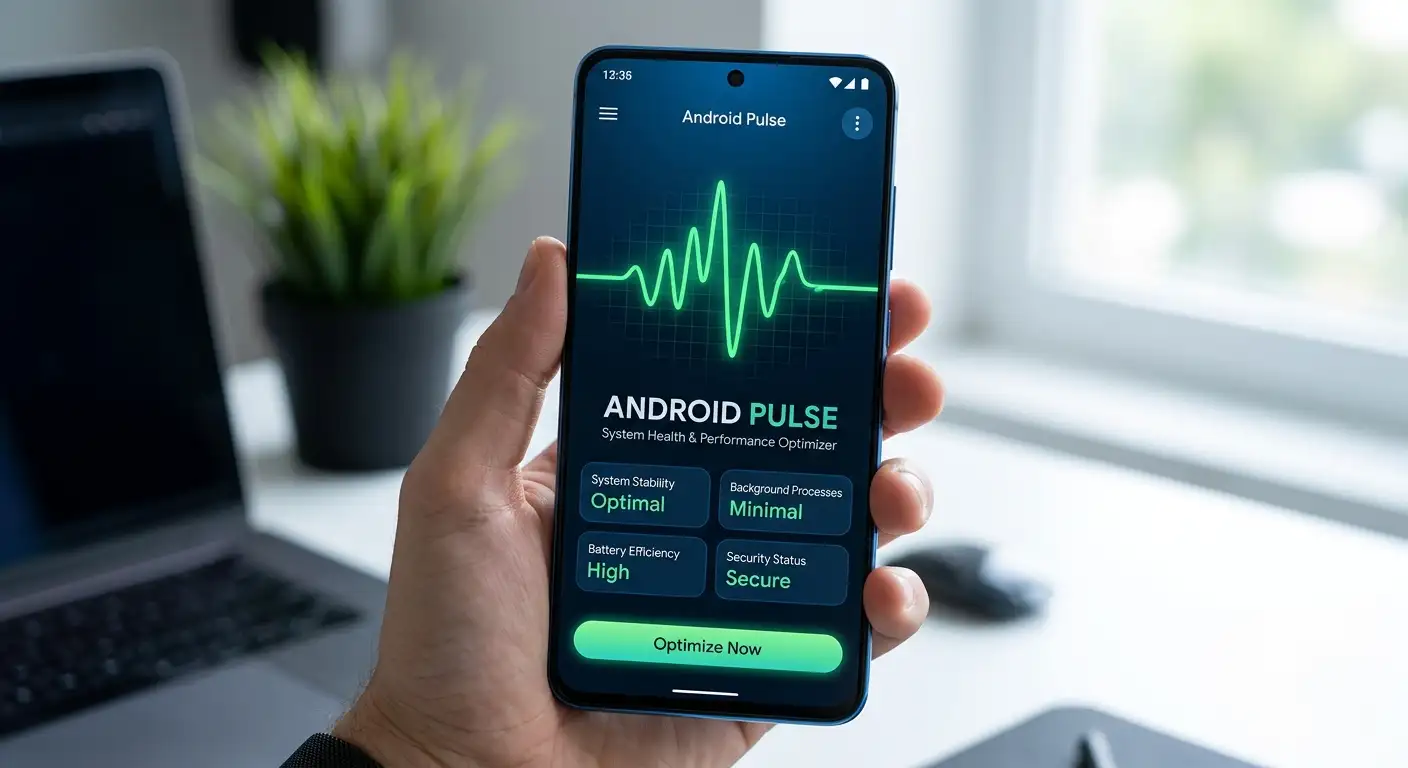

We created this comprehensive, easy-to-understand guide to break down everything you need to know about the Android Pulse app, its role as an essential Google system tool, how it handles your data safety, and why it is critical for maintaining a healthy Android ecosystem.
What Is the Android Pulse App?
The Android Pulse app is an internal system component developed by Google designed to monitor, maintain, and optimize core operating system processes on mobile devices. Unlike traditional smartphone applications like Instagram, WhatsApp, or YouTube, Android Pulse does not feature a user-visible icon on your home screen or app drawer. It operates quietly in the background, serving as a vital engine component that keeps your smartphone running smoothly.
Think of Android Pulse as the engine diagnostics tool inside a modern automobile. You rarely see the internal diagnostic sensors while driving, but they constantly track engine performance, check oil pressure, monitor battery levels, and alert the central computer if something goes wrong. Similarly, Google’s system tool checks the overall health and stability of your smartphone behind the scenes.
Why Is Android Pulse Installed on Your Device?
Many users discover Android Pulse while auditing their phone storage or reviewing battery usage statistics in their settings menu. Because they never manually downloaded it from the Google Play Store, many people worry it might be bloatware, spyware, or malware.
We can assure you that Android Pulse is a legitimate, official Google application. Here are the primary reasons it is present on your device:
-
Background Telemetry and System Health Checks: The app collects vital operational metrics regarding how your device is performing, ensuring that the Android operating system remains stable under heavy usage.
-
App Crash and Error Reporting: When an app unexpectedly closes or freezes, Android Pulse helps capture diagnostic data so developers and system engineers can fix underlying bugs.
-
Automated Updates and Security Patches: As part of Google Play System Updates, tools like Android Pulse ensure that minor security fixes and performance tweaks can be delivered seamlessly without requiring a full Android software upgrade.
-
Performance Tuning: It optimizes how system resources (such as memory and processor output) are distributed when opening complex applications or switching between tasks.
How Does Android Pulse Work Behind the Scenes?
To understand how Android Pulse works without getting bogged down in overly technical jargon, it helps to look at the three main functions it performs daily on your smartphone:
1. Monitoring System Stability
Every second your phone is powered on, dozens of services run simultaneously—handling Wi-Fi connections, cellular signals, touch inputs, display rendering, and notification syncs. Android Pulse acts as a centralized supervisor. If a background process begins consuming excessive resources or behaving erratically, Pulse flags the issue to prevent your entire phone from freezing or restarting unexpectedly.
2. Managing Device Battery Life and Memory
One of the main causes of rapid battery drain on smartphones is poorly optimized background activity. Android Pulse monitors how apps interact with system memory and processor power. By identifying background tasks that are hung or stuck in a loop, it helps protect your battery health and ensures your physical memory (RAM) remains free for the apps you are actively using.
3. Delivering Diagnostic Feedback
When you opt into sending diagnostic and usage data during your device setup, Android Pulse compiles anonymous performance summaries. This data helps Google identify broad issues—such as a specific phone model crashing on a new software build—so they can deploy targeted solutions globally.
Understanding Data Safety and Privacy in Android Pulse
Whenever a hidden system app is discovered, privacy concerns naturally arise. You might ask: Is Google using Android Pulse to track my personal conversations, photos, or location?
According to official entries on the Google Play Store Data Safety page for com.google.android.apps.pulse, Google adheres to strict guidelines regarding system-level diagnostics.
Here is a clear breakdown of what Android Pulse does and does not do with your personal data:
-
No Personal Identifiable Information (PII) Theft: The tool does not access your personal text messages, photos, contacts, financial information, or personal files.
-
Encryption in Transit: Any diagnostic metrics or crash logs sent from your device to Google servers are encrypted during transmission, protecting your information from interception.
-
Data Privacy Controls: System diagnostic collection is tied directly to your device’s overall privacy settings. If you turn off “Usage & Diagnostics” in your Android settings, the app severely limits the data it collects.
-
Purpose-Driven Data Handling: Collected data is strictly used for app functionality, system analytics, developer communications, and prevention of fraud or security vulnerabilities.
Package Name: What Does com.google.android.apps.pulse Mean?
In the Android ecosystem, every installed application possesses a unique package name that acts as its digital identification card. For the Android Pulse app, this identifier is com.google.android.apps.pulse.
Here is what that package name breaks down to:
-
com.google: Indicates that the application is officially created and digitally signed by Google.
-
android: Specifies that the package is built explicitly for the Android platform.
-
apps: Clarifies that it is structured as an application within the operating system architecture.
-
pulse: The specific name of this system diagnostic service.
When reviewing your device’s app list, if you see the package identifier com.google.android.apps.pulse, you can rest assured it is an authentic, verified Google system tool.
Should You Disable or Uninstall the Android Pulse App?
When users attempt to free up storage space or stop background processes, they often consider disabling apps they do not recognize. However, modifying core system services can lead to unintended consequences.
Can You Uninstall It?
In most cases, you cannot uninstall Android Pulse through standard phone settings. Because it is pre-installed as a system package by Google or your phone’s manufacturer, the option to uninstall is disabled.
Should You Force Stop or Disable It?
We strongly advise against disabling or force-stopping Android Pulse.
Disabling essential system components can cause unpredictable behavior across your smartphone, including:
-
Increased app crashes and unexpected system freezes.
-
Disrupted automated security updates and bug fixes.
-
Potential degradation in battery efficiency and overall device speed.
-
Inaccurate diagnostic logs when troubleshooting real device problems.
Because Android Pulse uses a negligible amount of storage space and operates with extreme efficiency, leaving it enabled will ensure your phone operates at peak efficiency.
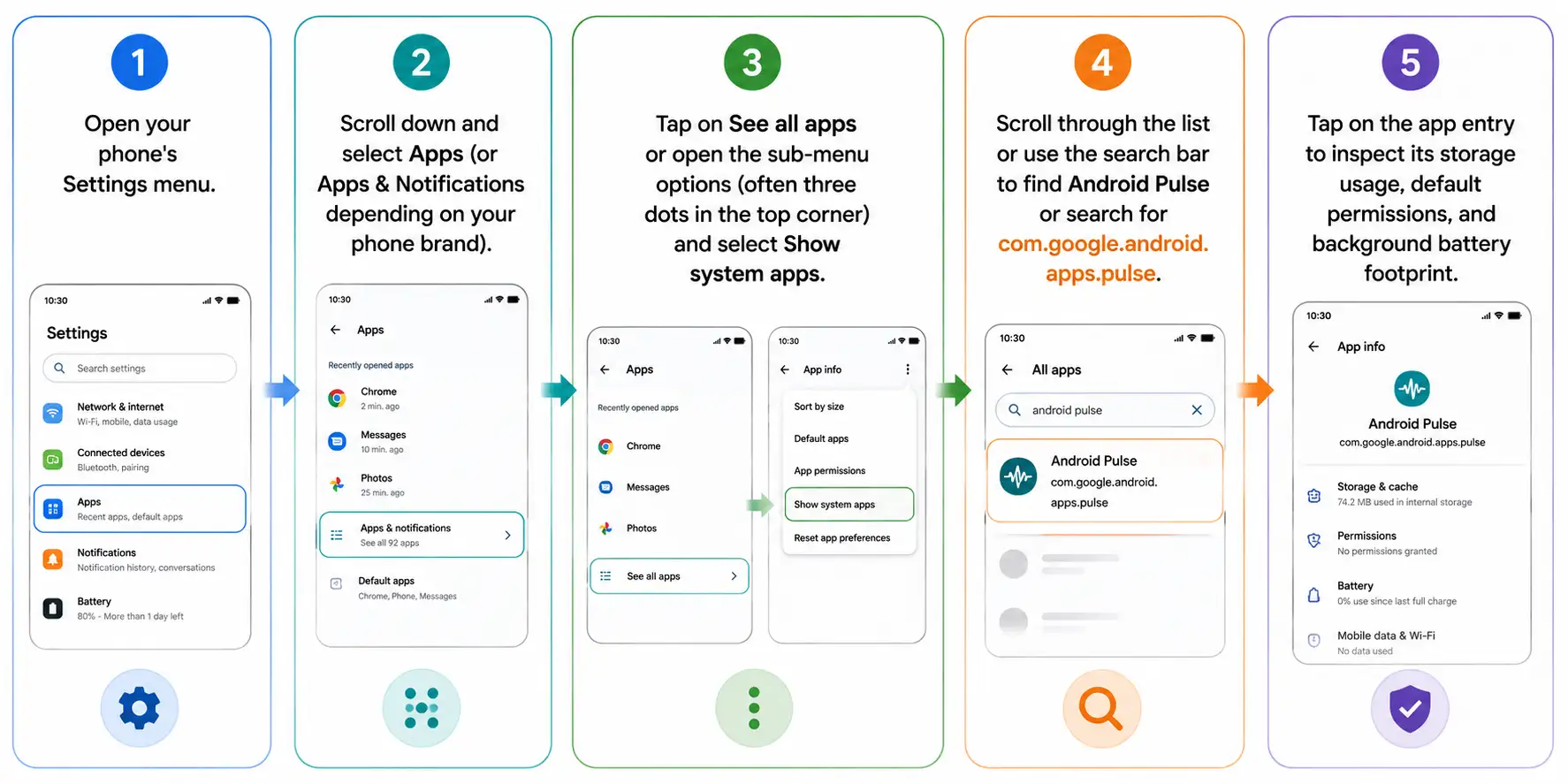
How to Check Android Pulse Details on Your Smartphone
If you want to view the permissions, storage footprint, or settings for Android Pulse on your own phone, follow these straightforward steps:
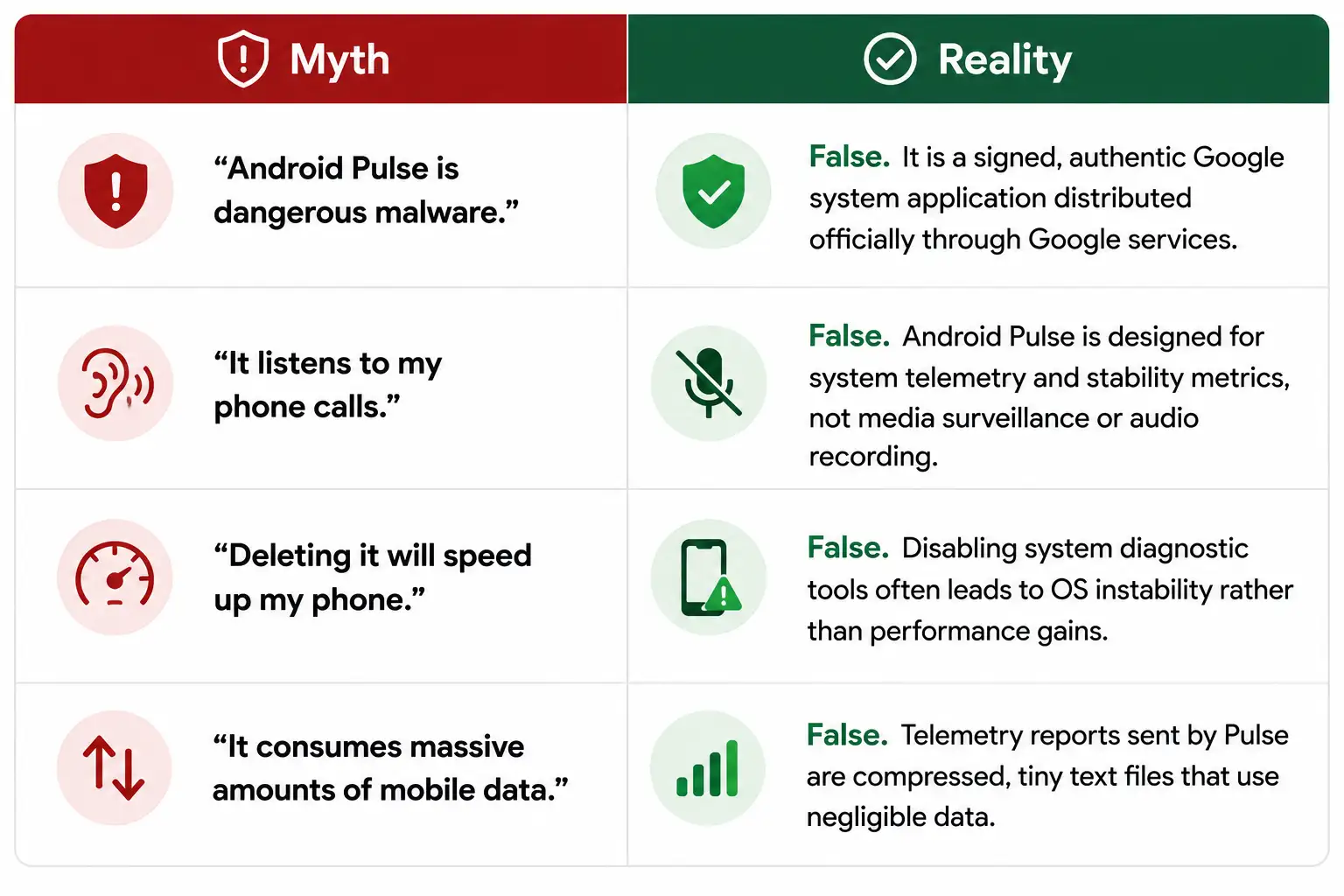
Common Myths About Android Pulse Debunked
To clear up common misunderstandings found across online tech forums, let us address a few frequent myths regarding this software:
Summary: Why Android Pulse Matters for Everyday Users
You do not need to be a software engineer or tech enthusiast to appreciate what Android Pulse does for your smartphone. While it functions silently without a flashy user interface, its continuous background work keeps your operating system stable, secure, and energy-efficient.
By handling diagnostic data securely, respecting privacy standards listed on the Google Play Store, and running automated health checks, Android Pulse ensures that your day-to-day smartphone experience remains seamless and trouble-free. The next time you spot com.google.android.apps.pulse in your system settings, you can feel confident knowing it is simply Google’s quiet helper working to keep your phone running reliably.

Selva Ganesh is a Computer Science Engineer, Android Developer, and Tech Enthusiast. As the Chief Editor of this blog, he brings over 10 years of experience in Android development and professional blogging. He has completed multiple courses under the Google News Initiative, enhancing his expertise in digital journalism and content accuracy. Selva also manages Android Infotech, a globally recognized platform known for its practical, solution-focused articles that help users resolve Android-related issues.




Thanks for taking the mystery out of com.google.android.apps.pulse with such a clear explanation. I can finally stop wondering why it was silently installed on my device.
Every Android user should take the time to read up on these core framework packages. It helps demystify the technology we rely on for almost every aspect of our lives.
I am glad to see an article that addresses both the functionality and the privacy aspects in equal measure. It stops people from spreading wild rumors on community forums.
Operating systems are extraordinarily complex beasts beneath the sleek glass touchscreens we interact with daily. Appreciating tools like Android Pulse gives a neat glimpse under the hood.
Finding mysterious processes on my phone always triggers my inner detective mode. Your analysis provided the exact answers I needed without getting bogged down in confusing jargon.
Background synchronization and system monitoring are critical for a seamless smartphone experience. It makes complete sense why Google utilizes a dedicated app for this function.
Digital hygiene is important, but sometimes we look for problems where none actually exist. This write-up proves that Android Pulse is completely harmless and completely normal.
I was worried it might be a remnant of some pre-installed bloatware from my mobile carrier. Learning that it is an official Google system tool completely changes my perspective.
Companies should really make system app disclosures much more transparent right out of the box. Until that happens, independent explainers are the best resource we have available.
Navigating Android’s internal file system always feels like walking through a minefield of unfamiliar code. This article acted as a reliable map to help me understand the Pulse application.
I noticed my tech-savvy friends arguing about this exact application on social media yesterday. Now I can jump into the conversation and explain that it is just a standard Google utility.