
Instagram Could Soon Log Users Out at Night – We are witnessing one of the most significant shifts in how social media platforms operate for young users. As part of a landmark legal settlement with state attorneys general across the United States, Meta has formally agreed to implement a mandatory nighttime lockout for teenage users on both Instagram and Facebook.
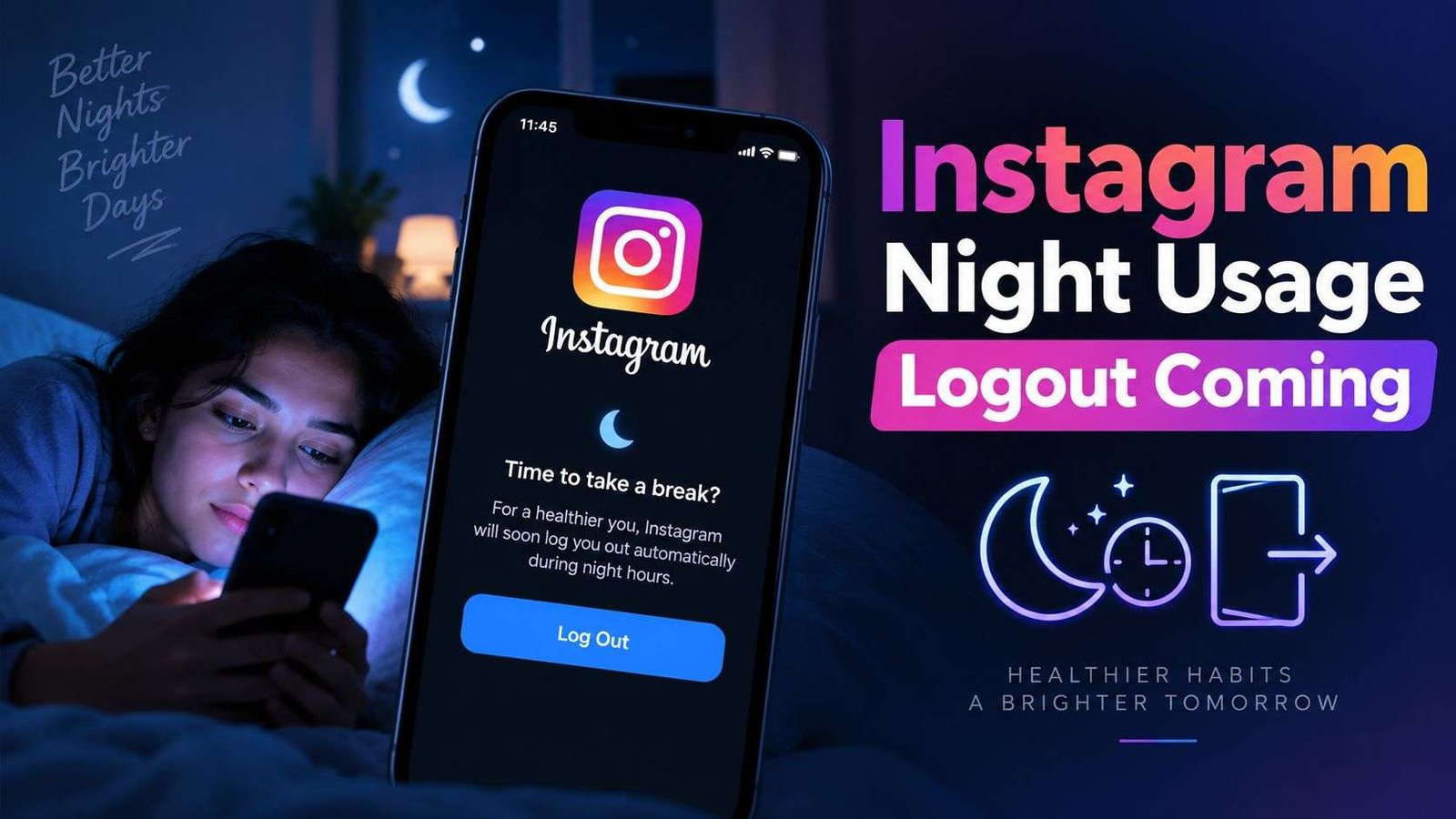

This major policy change aims to tackle midnight scrolling, sleep deprivation, and the growing mental health challenges associated with late-night social media use. Below, we break down everything parents, teenagers, and everyday app users need to know about these upcoming changes in plain, straightforward terms.
The Core Breakdown: How the 12:00 AM to 6:00 AM Lockout Works
Under the new terms, Meta will enforce an automatic overnight curfew for minor accounts. Between 12:00 AM and 6:00 AM, teen users will find themselves locked out of the core entertainment sections of Instagram and Facebook.
During this six-hour window, teenagers will experience key functional blocks across both platforms:
-
No Feed Access: Users cannot scroll through standard posts, updates, or photos shared by friends or creators.
-
Stories Blocked: Viewing temporary daily updates from followed accounts will be disabled.
-
Explore Page Disabled: The discovery grid that recommends new photos and trending topics will be unavailable.
-
Reels Paused: Short-form video feeds—often considered the most addictive feature during late hours—will be shut off completely.
-
Posting Restraints: Teen accounts will be blocked from publishing new posts, uploading Stories, or sharing public videos until the lockout window ends at 6:00 AM.
Why Direct Messaging (DMs) Will Remain Active
While content discovery and video streaming are strictly blocked, Meta is keeping Direct Messaging (DMs) open during the nighttime hours.
The reasoning behind this decision is straightforward: safety and communication. Lawmakers and child safety advocates recognized that young people still need a reliable way to communicate with close friends, family members, or trusted contacts in emergency situations. By disabling the infinite scrolling features while keeping basic text messaging available, the policy targets mindless entertainment consumption without cutting off essential personal connection lines.
Who Is Affected and How Parental Control Tools Fit In
This automatic lockout applies by default to all registered minor accounts (users under 18 years old) residing in participating US states.
The Role of Meta’s Parental Supervision Tools
Parents are given significant control over how these restrictions apply in their households. Through Meta’s parental supervision tools, parents can connect their accounts with their teen’s account to manage settings:
-
Adjusting Hours: Parents can override the default midnight-to-6:00 AM window to align with household rules.
-
Granting Exceptions: Parents have the ability to lift or modify the curfew if they feel their teenager requires temporary access.
-
Monitoring Usage: Parents receive increased visibility into how much time their teenager spends on the app daily.
Could the Curfew Expand to 10:00 PM?
The legal agreement includes a provision that could extend these restrictions even further. If other competing social platforms (such as TikTok or Snapchat) adopt similar mandatory late-night limits, Meta’s overnight lockout window may automatically expand to run from 10:00 PM to 7:00 AM. This clause ensures a unified, industry-wide standard for protecting youth online.
Beyond the Nighttime Lockout: Additional Safety Features Included in the Settlement
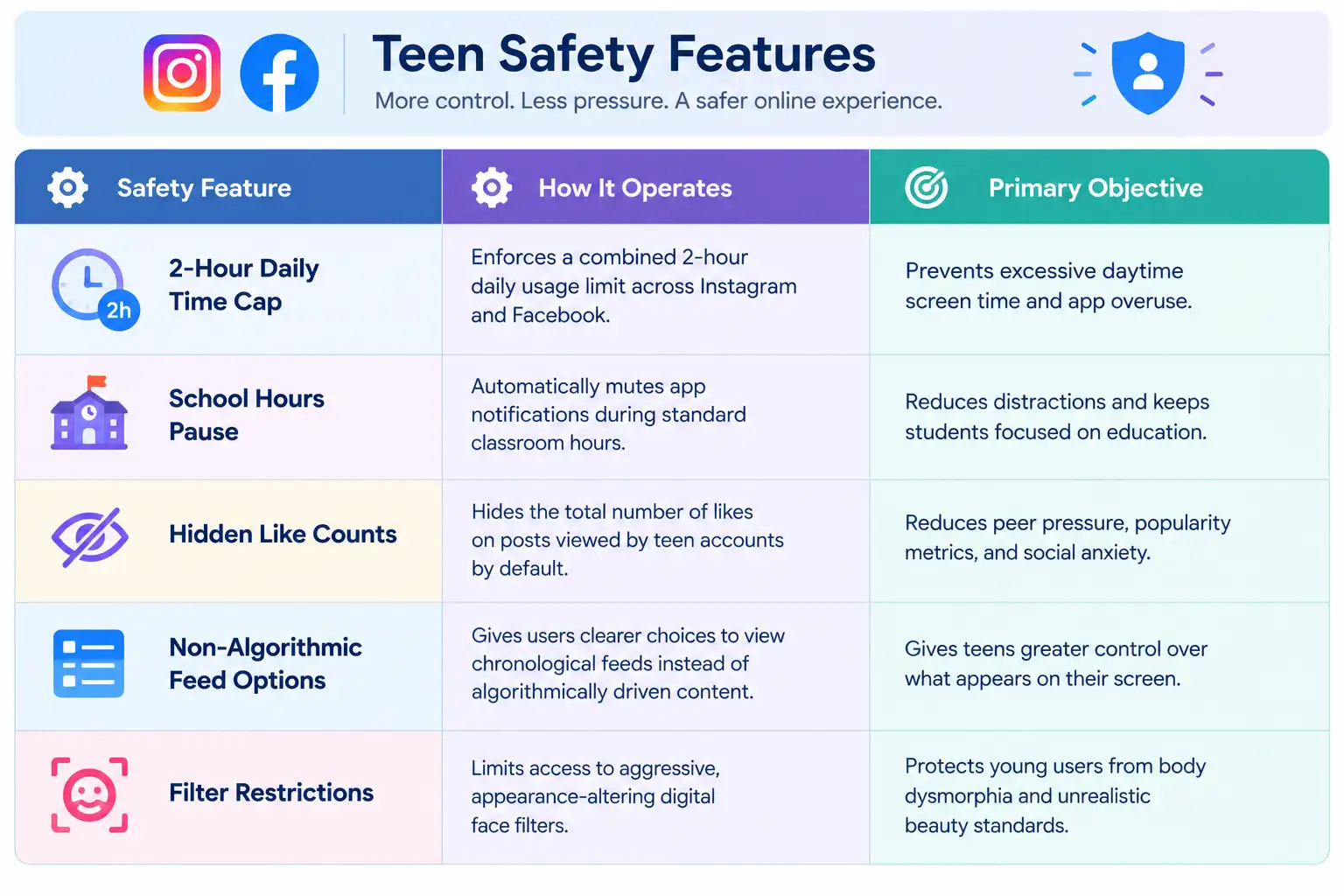
The midnight lockout is only one part of a broader set of changes designed to make social media safer for young audiences. The agreement introduces several built-in protections:
Why State Attorneys General Pushed for Mandatory Social Media Rules
For years, child health researchers and psychologists have warned about the negative effects of late-night screen exposure on adolescent development. Constant notifications and algorithmically driven video feeds keep teenagers awake during critical rest hours, leading to chronic sleep deprivation, reduced academic performance, and heightened mental distress.
By securing this settlement, state attorneys general aim to transition social media management from passive warnings to active platform boundaries. Instead of relying entirely on teenagers to exercise self-restraint at midnight, the platforms themselves now enforce built-in stopping points.
What Parents and Teenagers Should Expect Next
As Meta rolls out these technological updates, families should prepare for these transitions by taking a few simple steps:
-
Verify Account Birthdays: Ensure that teen accounts reflect the correct birth dates so that safety measures and default protections activate accurately.
-
Set Up Parental Supervision: Parents should link their accounts using Instagram’s safety settings to customize time limits and review safety preferences together.
-
Establish Household Tech Rules: Use these platform changes as an opportunity to discuss healthy digital habits, bedtime routines, and screen-free zones in the house.
This policy shift marks a fundamental turn in how major tech companies structure their platforms for younger audiences. By enforcing a clear distinction between late-night entertainment and healthy rest, these new measures aim to foster a safer, more balanced online environment for the next generation.

Selva Ganesh is a Computer Science Engineer, Android Developer, and Tech Enthusiast. As the Chief Editor of this blog, he brings over 10 years of experience in Android development and professional blogging. He has completed multiple courses under the Google News Initiative, enhancing his expertise in digital journalism and content accuracy. Selva also manages Android Infotech, a globally recognized platform known for its practical, solution-focused articles that help users resolve Android-related issues.




Leave a Reply