
How to Order Gemini Powered Google Home Speakers? – The smart home industry has taken a monumental leap forward with the release of the Google Home Speaker. Pre-orders officially opened on June 17, 2026, ahead of the June 25, 2026 retail launch. Priced at $99.99, this brand-new device is the very first audio system built from the ground up to support the Gemini for Home voice assistant.
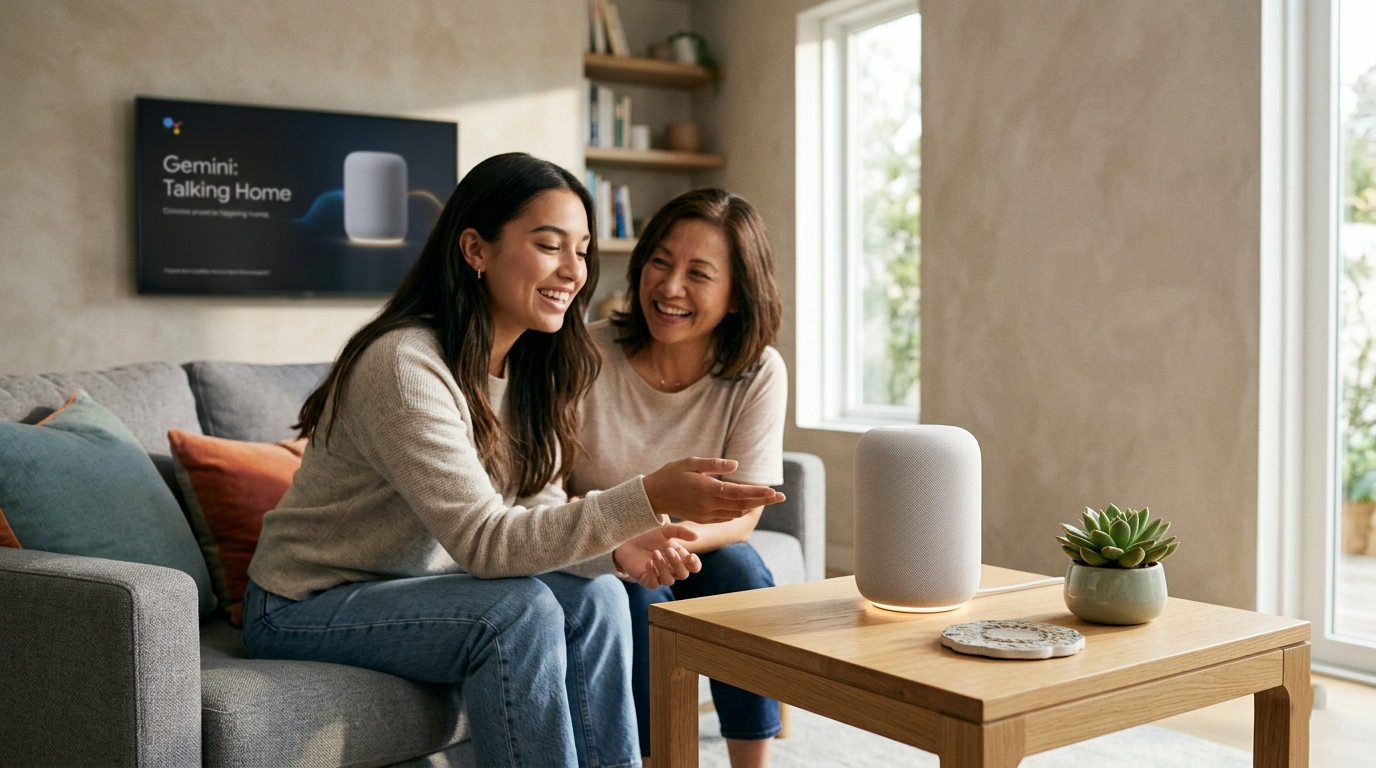

Unlike older models that relied on rigid, pre-programmed voice commands, this hardware upgrade introduces deep artificial intelligence directly into the living room. For everyday households and non-tech users, this means the speaker finally understands human speech naturally, making it vastly superior to traditional smart speakers.
How to Order the New Google Home Speaker
Purchasing the new device is a straightforward process, available through several major retail avenues. Because demand is high following the product launch, securing a unit through the right channel ensures timely delivery and access to proper regional colors.
1. The Official Google Store
The most direct method to purchase the device is through the digital storefront operated by Google.
- Navigate to the official hardware section of the store.
- Select the audio or smart home category to find the Google Home Speaker.
- Choose your preferred color option from the available palette.
- Advance to the checkout screen, log in with your primary email account, and finalize the payment to confirm the order.
2. Authorized Electronics Retailers
Major physical and digital electronics retailers carry the speaker alongside official channels. Outlets such as Best Buy, Target, and Amazon host dedicated product pages for the device. Ordering through these platforms allows buyers to utilize existing retail memberships, points programs, or local pickup options starting on the official release day.
3. Mobile Carrier Storefronts
Major telecommunication providers frequently stock Google hardware accessories. Checking the online accessory catalogs of companies like Verizon, T-Mobile, or AT&T provides an alternative ordering route, occasionally bundled with device upgrade promotions or cellular plan incentives.
Color Options and Aesthetic Enhancements
Google designed this hardware generation to blend into modern home decor rather than looking like an aggressive piece of technology. The exterior is wrapped in a custom 3D-knit textile made from sustainable materials.
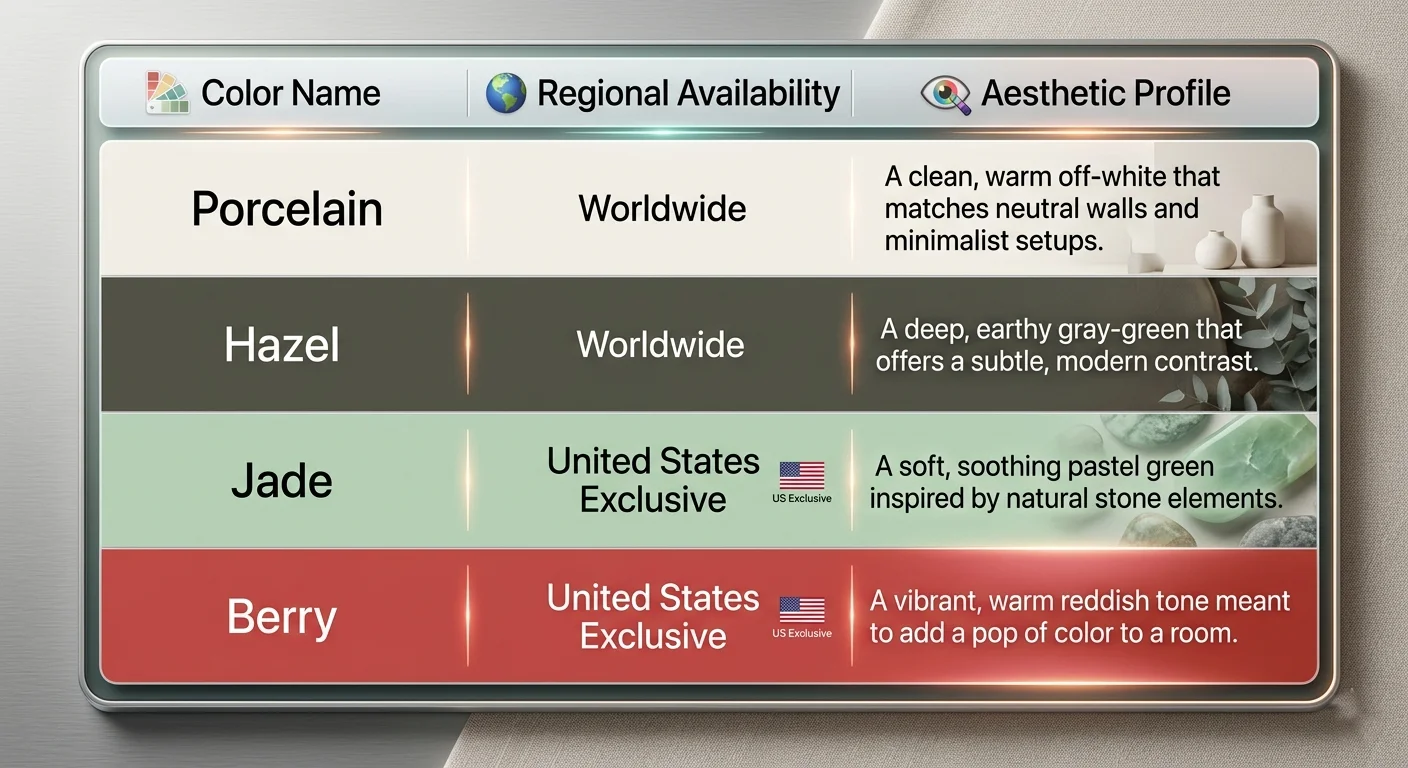
A key visual design element is the new light ring underglow located at the bottom of the device. This soft glow activates to communicate what the speaker is doing, changing patterns smoothly when the device is listening, processing information, or speaking back to you.
Special Features: Why Gemini Changes Everything
The primary difference between this device and every speaker that came before it is the replacement of the old Google Assistant with Gemini for Home. This change completely alters how the speaker interacts with you.
Conversational Memory and Mid-Sentence Corrections
Traditional smart speakers force users to start over completely if they make a mistake while talking. The new model features short-term conversational context. If you say, “Turn off the coffee maker… wait, I actually meant turn it on,” the AI understands the correction instantly and executes the proper action. It remembers the topic of discussion across multiple back-and-forth sentences, so you do not have to repeat the wake-up phrase every few seconds.
Handling Multiple Commands at Once
Older hardware required users to give a single instruction, wait for a response, and then give another instruction. This system can process multiple distinct commands in a single breath. For example, a user can say:
“Dim the kitchen lights, play some relaxing music, and set a timer for 20 minutes.”
The hardware parses the sentence, separates the three requests, and executes them simultaneously without hesitation.
True Natural Language Understanding
You no longer have to memorize exact phrases to make your home cooperate. Instead of using highly specific commands, users can talk to the speaker using everyday logic.
- Smart Lighting: Instead of specifying a precise percentage or factory color name, you can ask for “the color of the ocean” or “the glow of the moon.” The AI automatically calculates the correct color hue and applies it to your connected bulbs.
- Complex Reasoning: The speaker handles multi-step questions easily. Asking, “What will the weather look like for the next baseball game?” causes the assistant to check the sports schedule, find the location of the game, cross-reference the timing, and provide an accurate weather forecast for that exact stadium window.
Hardware Specifications and Audio Architecture
While the intelligence of the speaker is driven by artificial intelligence, the physical build of the device marks a substantial upgrade over the aging Nest Audio and Nest Mini designs.
Full 360-Degree Balanced Audio
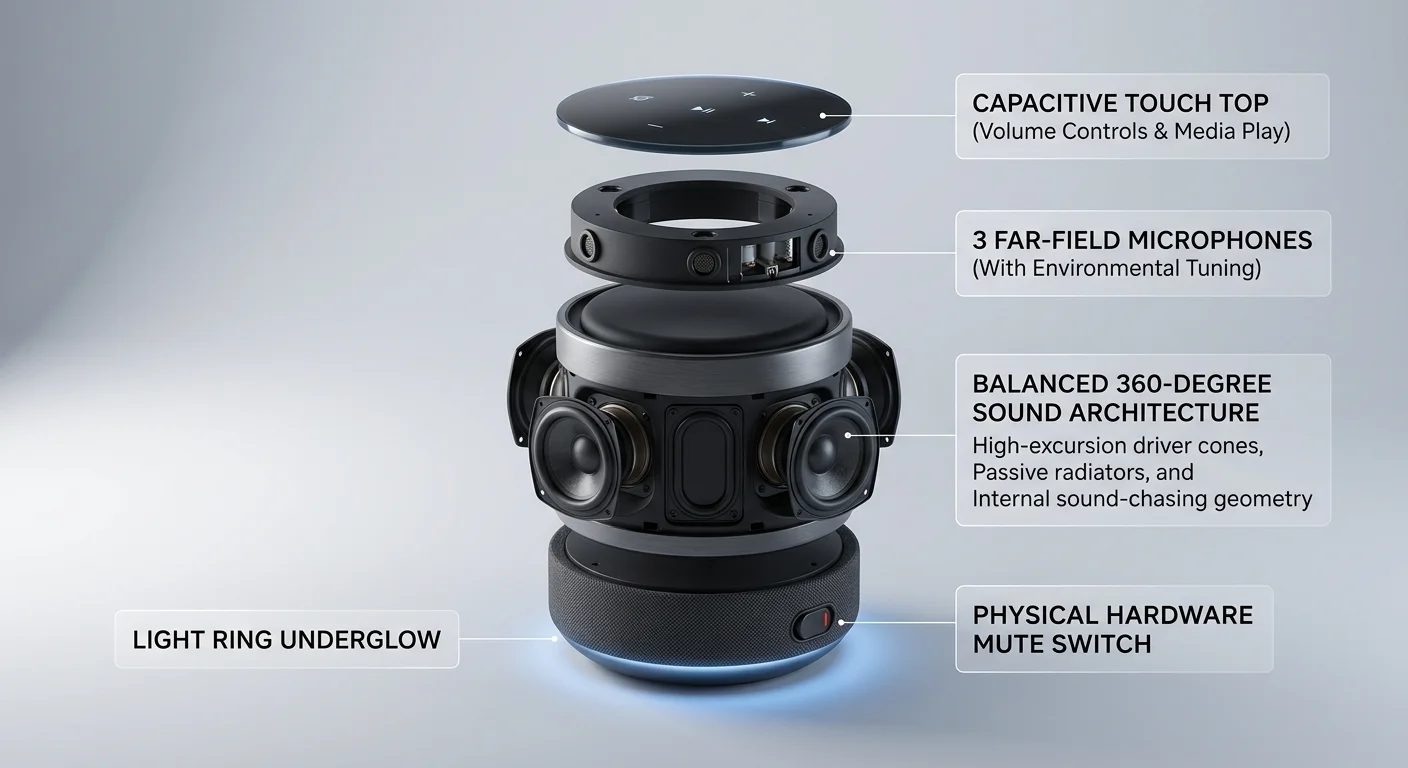
The physical chassis is compact, yet it features a spatial layout that distributes sound evenly in all directions. Whether the unit sits on a central kitchen island or is tucked away on a corner bookshelf, the balanced 360° sound remains clear, rich, and consistent throughout the room.
Intelligent Microphone Processing
The unit contains three high-performance far-field microphones that constantly analyze the acoustics of the room. When ambient noise increases—such as a running faucet, a loud television, or cross-talk in a busy room—the hardware filters out the background distractions. This allows the system to recognize your voice accurately without requiring you to yell.
Mini Home Theater Integration
For homes utilizing the Google TV Streamer, two of these new speakers can be paired together wirelessly. When linked, they coordinate to function as a dedicated spatial audio system, creating an immersive surround-sound environment for movies, television shows, and video games.
Comparing the New Gemini Speaker to Legacy Systems
To understand why this launch represents a major shift, it helps to compare the modern hardware directly against older iterations of smart home technology.
1. Versus Older Google Nest Speakers
Older models like the Nest Mini or Nest Audio relied completely on cloud computing for rigid command matching. They frequently suffered from “incorrect artist” errors when requested to play music, and struggled to identify smart home devices if the user did not say the exact name recorded in the application. The new speaker uses upgraded models specifically tuned to reduce music misunderstandings, recognizing personal playlists even if the user gets the title slightly wrong.
2. Versus Traditional Competitors
Alternative devices, such as the basic Amazon Echo or Apple HomePod Mini, operate on localized command trees. They struggle heavily with multi-step logic and do not possess the contextual reasoning required to parse conversational corrections. While competitive devices are excellent at basic tasks like reading the time or adjusting a thermostat, they lack the advanced reasoning model that allows the new Google speaker to serve as an actual conversational partner.
Security, Privacy, and Smart Home Connectivity
Google built the system to act as a reliable foundation for modern connected households while preserving user privacy through physical and digital safeguards.
Dedicated Privacy Controls
For users who prefer absolute control over when the device is listening, the chassis retains a physical microphone mute switch. Toggling this switch cuts off power to the microphone array mechanically, ensuring that no audio can be processed until the user manually flips the switch back to the active position.
Advanced Smart Home Routing
The hardware acts as a powerful central hub for the modern household ecosystem. It features built-in support for Matter and functions as a Thread 1.3 border router. In simple terms, this means the speaker communicates directly and instantaneously with smart lights, plugs, locks, and appliances from various brands, ensuring faster response times and improved reliability without clogging your household Wi-Fi network.
Unlocking Extra Features with Google Home Premium
While the speaker works beautifully straight out of the box for music, basic queries, and home controls, an optional Google Home Premium subscription ($9.99 per month) unlocks the full potential of the integrated artificial intelligence.
1. Gemini Live Integration
By saying, “Hey Google, let’s chat,” premium subscribers can engage in completely free-flowing, casual conversations. This allows users to brainstorm ideas, practice a foreign language, get complex advice, or learn about historical topics in a natural, back-and-forth manner without using wake words between sentences.
2. Intelligent Camera Search
If your home uses connected cameras, the premium subscription allows you to search through your video history using conversational phrases. Instead of scrolling through hours of recorded clips, a user can simply ask their speaker, “Did the FedEx truck come by today?” or “Is the backyard gate open?” The AI reviews the video feeds instantly and describes the exact events out loud.
3. Automated Routine Generation
Through a feature called Help Me Create, subscribers can type or speak simple descriptions of what they want their house to do. Saying something as simple as, “Make the house cozy when the sun goes down,” prompts the AI to write and configure a complete custom automation sequence across your lights, blinds, and thermostat automatically.

Selva Ganesh is a Computer Science Engineer, Android Developer, and Tech Enthusiast. As the Chief Editor of this blog, he brings over 10 years of experience in Android development and professional blogging. He has completed multiple courses under the Google News Initiative, enhancing his expertise in digital journalism and content accuracy. Selva also manages Android Infotech, a globally recognized platform known for its practical, solution-focused articles that help users resolve Android-related issues.





Leave a Reply